
Round TFT LCD Modules 0.99″–7.0″ — Wearables & Knobs | RONEN
A true circular active area — no masked corners. RONEN's 16 round TFT modules span 0.99″ to 7.0″ at 128x115–1080x1080 resolution with brightness up to 1000 cd/m², made for smart watches, audio knobs, thermostat dials and beauty devices. SPI and MCU interfaces keep the BOM small; ODM covers flex shapes and bonded covers.
- 16 true-circular modules, 0.99″–7.0″
- Brightness up to 1000 cd/m², resolutions 128x115–1080x1080
- SPI / MCU interfaces — low-pin-count wearable BOMs
Browse all 128 special shape modules →
True Circle vs Masked Square: The Area You Actually Get
There are two ways to put a round image behind a round bezel, and they are not equivalent. A masked square panel shows a circular image with black corners, produced by a printed mask or by bezel geometry; a true-circular panel has a circular active area and a circular polariser. The first is cheaper because it uses a standard cut; the second is what makes a gauge look engineered rather than adapted.
The geometry is worth knowing either way. The largest square that fits inside a circle of diameter d has side d/√2, so its area is half the square of the diameter — 63.7% of the circle’s area. In other words, a rectangular UI placed inside a round display leaves about 36% of the pixels unusable, and a masked square panel spends the same 36% on black corners it still has to light.
Designing a UI for a Circle
A round canvas changes the layout rules, and the change is not cosmetic:
- Keep critical readouts near the centre. The usable width shrinks as you move outward; a label that fits at the vertical centre will be clipped at the top of the same circle.
- Use the outer ring for progress and status. An arc is the one shape that uses the circle’s own geometry instead of fighting it.
- Reserve a safe circle. Treat about 80% of the diameter as the reliable layout area and keep text inside it; the outer 10% on each side is where masks, bezel tolerance and viewing-angle fall-off all land.
Concentricity: The Mechanical Tolerance Nobody Budgets
A round display is usually mounted behind a round aperture or inside a knob, and the eye is extremely good at spotting an off-centre circle. The stack-up has three contributors: the panel’s active area relative to its outline, the aperture position in the front part, and the assembly clearance. Each is typically a few tenths of a millimetre, and they add in the same direction unless the design allows adjustment.
Two practical measures: specify the concentricity tolerance from the drawing rather than assuming it, and design the front part so the panel is located by its active area or by a boss that references the same datum as the aperture. Where the display sits behind a rotating knob, the knob shaft becomes the datum and the panel should float slightly on its mounting until the shaft is centred.
Resolution, PPI and the Smallest Glyph
Round panels are read close — a watch at 25 cm, a thermostat dial at 40 cm — so pixel density matters more than diagonal. What the range delivers:
| Diagonal | Resolution | Pixel density | Pixel pitch |
|---|---|---|---|
| 0.99″ | 128×115 | 174 PPI | 0.15 mm pixel pitch |
| 1.3″ | 240×240 | 261 PPI | 0.1 mm pixel pitch |
| 2.1″ | 480×480 | 323 PPI | 0.08 mm pixel pitch |
| 2.76″ | 480×480 | 246 PPI | 0.1 mm pixel pitch |
| 4.0″ | 720×720 | 255 PPI | 0.1 mm pixel pitch |
| 4.0″ | 1080×1080 | 382 PPI | 0.07 mm pixel pitch |
| 7.0″ | 800×800 | 162 PPI | 0.16 mm pixel pitch |
A 240×240 circle at 1.3″ gives about 261 PPI: comfortable for 8 px Latin text and adequate for CJK glyphs at 12 px. The 480×480 parts at 2.1″–2.76″ sit above 300 PPI, which is watch-grade and lets a circular progress arc render without stair-stepping. The 7.0″ 800×800 panel is a different animal — a wall dial read at arm’s length, where 161 PPI is plenty.
Interface and Refresh on a Small Circle
Most small round panels are SPI or MCU parts, which suits a knob or a thermostat because the UI changes in small regions rather than full frames. The arithmetic is the same as any small panel: a 480×480 frame at 16 bits is 460 kB, which at 40 MHz SPI is roughly 92 ms — about 11 fps for a full redraw. An arc that updates by angle, or a value that redraws only its digits, costs a fraction of that and is the reason these interfaces remain adequate.
Where animation matters — a sweeping needle, a rotating menu — choose a part with an RGB interface and a host that has a display controller, or accept a lower frame rate and design the motion around it.
The Range at a Glance
| Size | Models | Resolutions in this range | Panel / touch variants | Where it usually goes |
|---|---|---|---|---|
| 0.99″ | 1 | 128×115 | IPS Round 1 | Watch, wearable |
| 1.28″ | 1 | 240×240 | Round 1 | |
| 1.3″ | 1 | 240×240 | IPS Round 1 | Dial, wearable |
| 1.5″ | 1 | 360×360 | Round 1 | Knob |
| 1.8″ | 1 | 360×360 | Round 1 | Thermostat dial |
| 2.1″ | 3 | 480×480, 360×360 | Round 2 / IPS Round 1 | Knob, gauge |
| 2.76″ | 2 | 480×480 | IPS Round 1 / Round 1 | Gauge |
| 3.4″ | 2 | 800×800 | IPS Round 1 / Round 1 | Instrument dial |
| 3.54″ | 1 | 800×640 | Round 1 | Gauge |
| 4.0″ | 2 | 720×720 | IPS Round 1 / Round 1 | Large dial, audio knob |
| 7.0″ | 1 | 1080×1080 | IPS Round 1 | Wall dial, appliance |
Standard Modules in This Range
16 standard models in this family
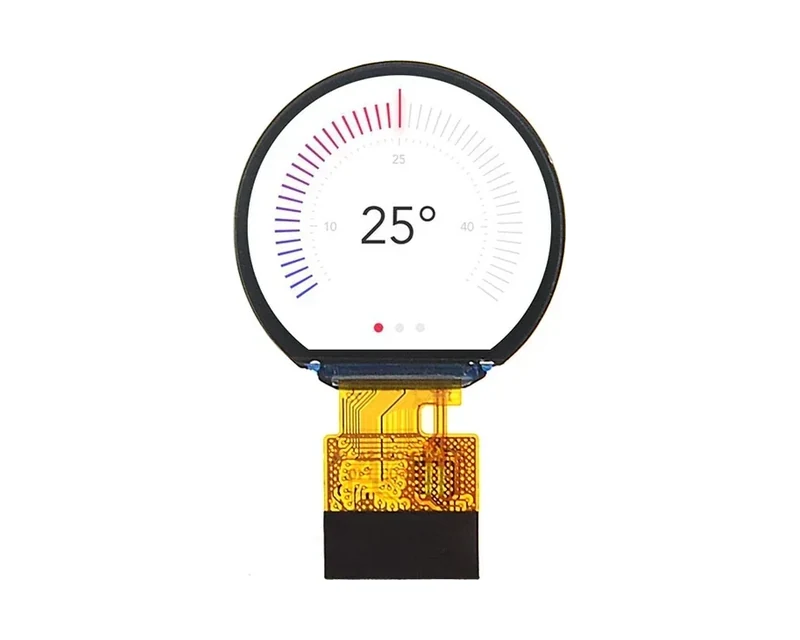
RG-T010BCSA-01
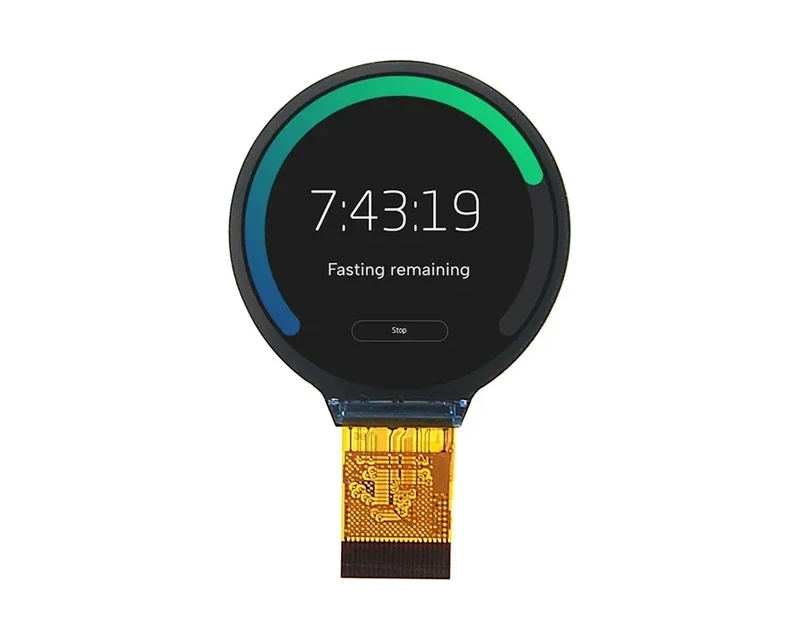
RG-T013HQGA-01
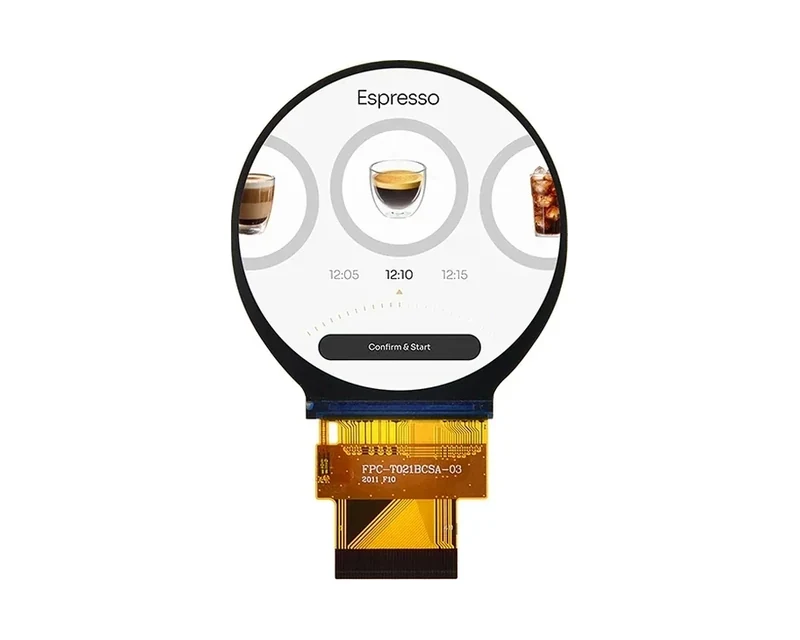
RG-T021BCSA-02
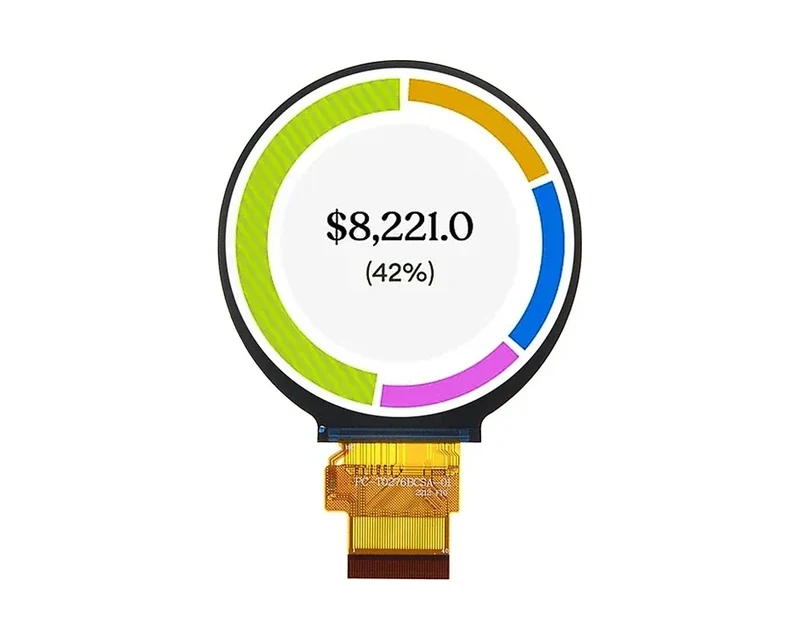
RG-T0276BCSA-01
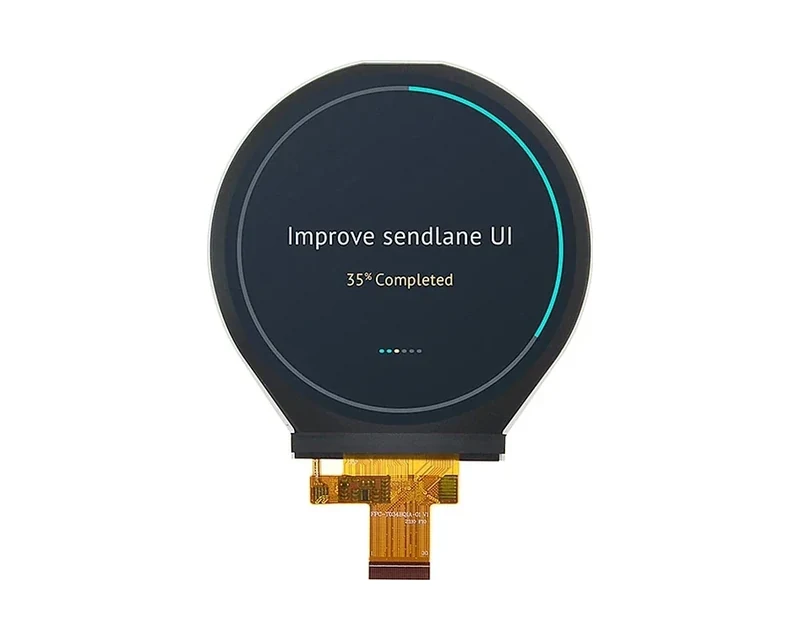
RG-T034BOIA-01
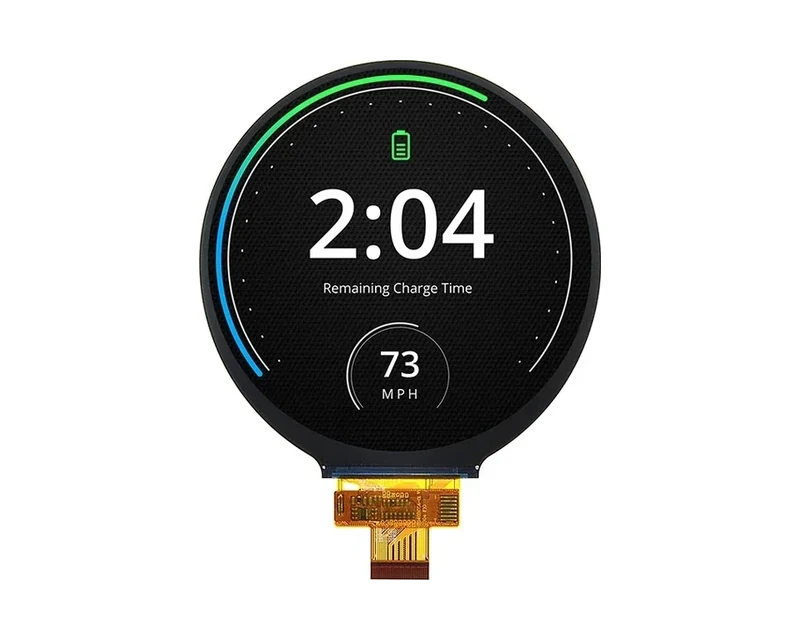
RG-T040BCSA-01
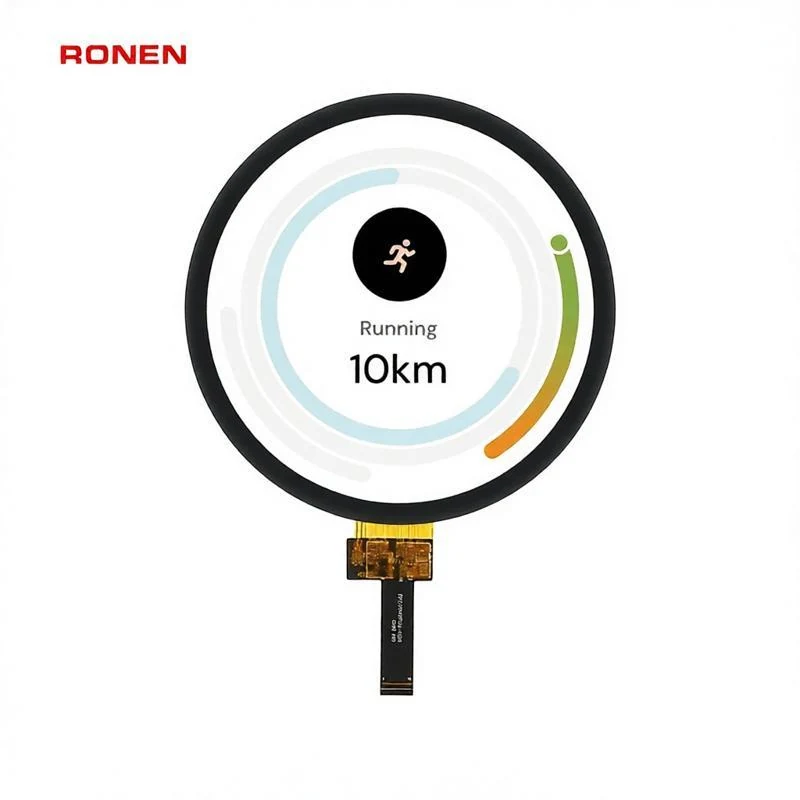
RG-T070TOSA-01
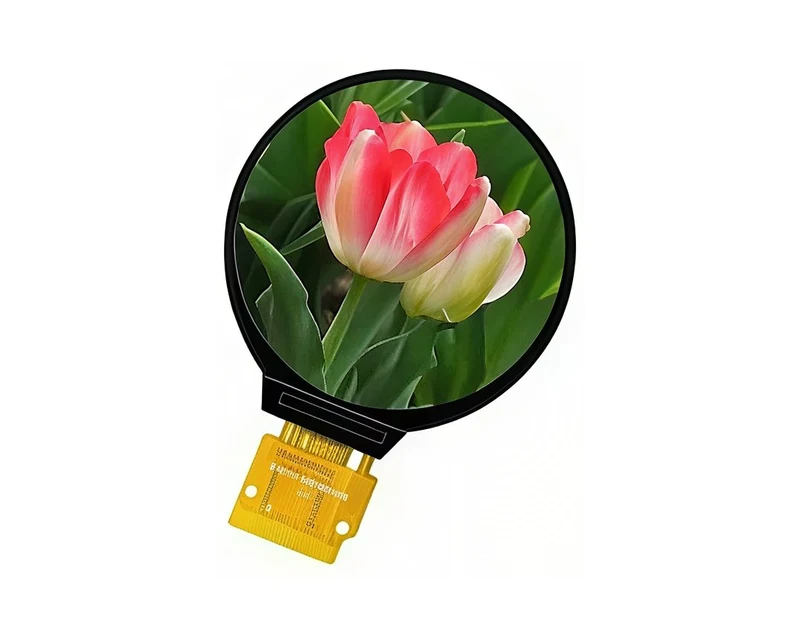
RG-T0128QI-H12
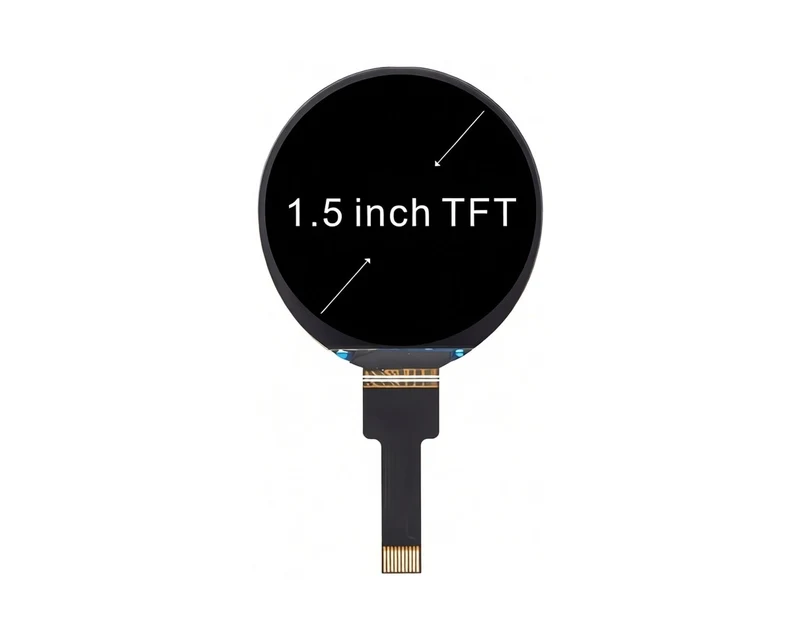
RG-T01615-XL12
RG-T018-XL10
RG-T021WQI-B12

RG-T276I-B40
RG-T034WX-B303-002
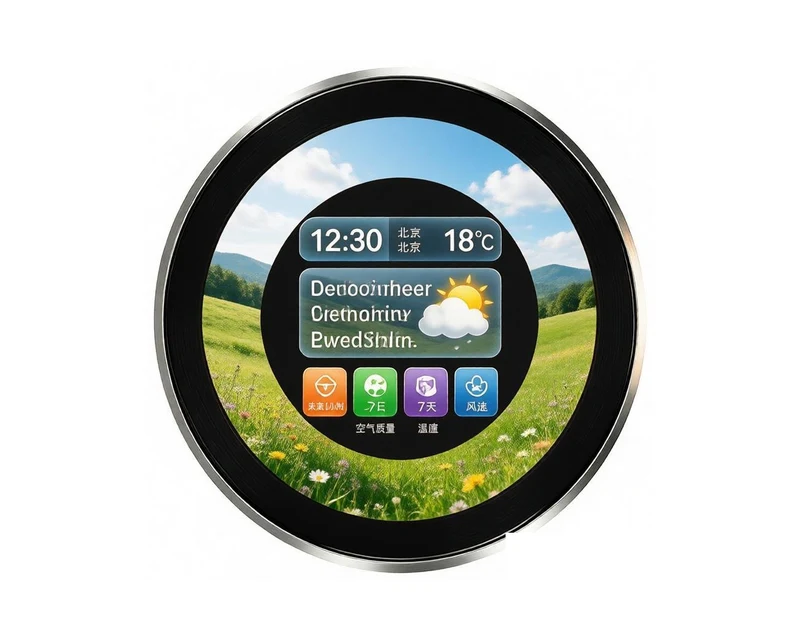
RG-T035IWVR53
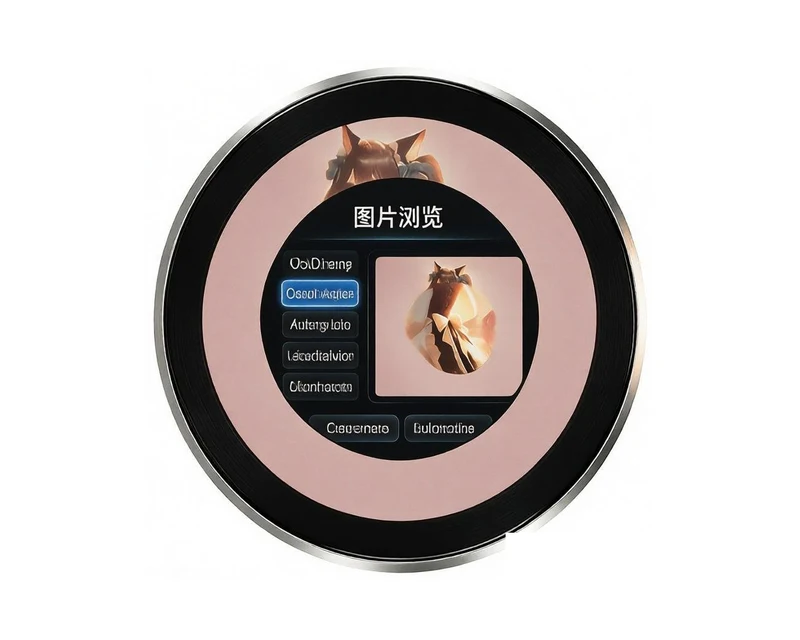
RG-T040WX-303-1007
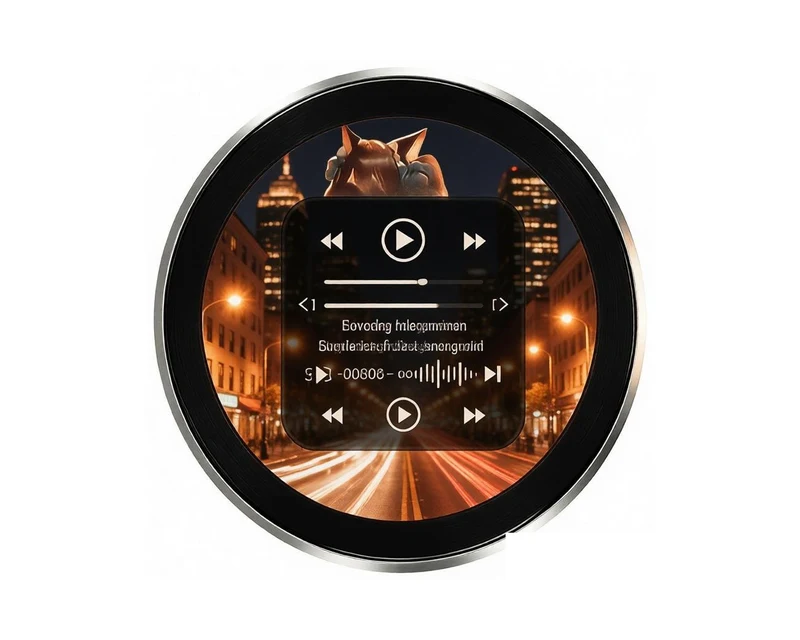
RG-T021WQI-H401AV2-002
Can’t find the exact model you need?
This is a standard model, and our online catalog shows only part of what we build. We hold additional models not listed here, and we can adjust brightness, interface, touch or outline within an existing product family, or evaluate a fully custom solution. If this model does not fully match your requirements, please email your specifications to sales@odmlcd.com. We’ll help you identify the right part or assess a custom option.
Browse all 12 round display sizes
Every size-specific page carries the complete 9-field specification and an RFQ path.
FAQ
Can you support standard supply and development?
Yes. Our 70+-engineer R&D team takes requirements from concept to EVT; for shaped / odd-form displays the concept-to-EVT cycle is 6–8 weeks with NRE from quoted per project depending on structural complexity. FPC, backlight, cover-lens, bonding and interface are all customizable.
What are the order quantities and stock?
All 190+ standard models are held in our standard program, so you can order exactly the quantity your build needs, from prototype runs to volume production. Custom / ODM builds are quoted case by case (typically 10–500 pcs) with volume-based pricing — tell us your volume and we'll quote.
Do you provide samples, and what is your sample policy?
Yes. We sample every standard model in our 190+ model catalog. Standard catalog parts are available as samples, typically at a nominal charge, with the prototype / sampling cycle confirmed per project in writing. Custom / ODM parts are sampled under the development NRE and timeline on the standard catalog modules page.
Each standard sample ships with the full package — datasheet (including the mechanical outline drawing); the 3D STEP model is available on request — so your mechanical and firmware teams can begin layout before mass production. Small bridge builds (<500 pcs) are supported if you need volume between sample and MP.
Tell us the P/N, quantity and destination on the contact page, and we'll arrange the sample handover under the forwarder and Incoterm nominated by your side.
Does a round panel need special mounting?
Yes, budget mechanical clearance behind the lens for the controller, and use a round bezel and gasket sized to the circular active area.
Is a true round panel worth the cost over a masked square?
It depends on how the product is judged. A masked square shows black corners and needs a mask aligned to a fraction of a millimetre; a true-circular panel shows a clean circle with no mask and a circular polariser. For a watch, a knob or a thermostat that sits in the open, the true-circular part is usually what makes the design read as intentional.
How much of a round screen can a rectangular layout use?
About 64%. The largest square inscribed in a circle covers 2/π of its area, so roughly 36% of the pixels cannot carry rectangular content. That is why round UIs put readouts near the centre and use the outer ring for arcs and status.
What resolution do I need for a 1.3-inch round display?
240×240 gives about 261 PPI at that diagonal — enough for 8 px Latin text and 12 px CJK glyphs read at 25–30 cm. Going higher mainly helps anti-aliased arcs and small icons; going lower makes circular progress rings look stepped.
Can the panel be centred accurately behind a knob?
Yes, if concentricity is specified rather than assumed. The stack-up is the panel active area relative to its outline, the aperture position, and assembly clearance — each a few tenths of a millimetre. Locate the panel by a boss that references the same datum as the aperture, and let it float slightly until the knob shaft is centred.
Do round panels support touch?
Some do, usually with a circular sensor bonded to the panel. On a knob or a watch the touch target is small and often covered by a raised bezel, so many designs use the knob encoder or a capacitive ring instead. Where touch is needed, the sensor and its tuning are part of the bonded assembly, not an add-on.