
Digital Signage Display Modules — High Brightness 10.1″+ | RONEN
Window-facing signage fights sunlight: at 800 cd/m² and above, content stays punchy where standard panels wash out. RONEN lists 12 high-brightness modules from 10.1″ to 21.5″ (850–1500 cd/m²) with wide-temperature options for unventilated totems and shelf-edge networks. Ask about ODM backlight boosts and bonded touch.
- 12 modules at 850–1500 cd/m² — sunlight-legible
- Sizes 10.1″–21.5″ for totems, menus and shelf networks
- Wide-temperature builds for sealed, fanless housings
Why 1500 cd/m² Can Still Look Grey in Daylight
Window-facing signage fails for a reason that has little to do with the number on the datasheet: the black level is not black. Ambient light reflects off the front surface and adds a constant luminance to every pixel, so the contrast a viewer sees is roughly (panel luminance + reflected luminance) / reflected luminance. For a matt surface under 100,000 lux with 5% reflectance, the reflected term alone is about 1,600 cd/m² — more than the panel emits.
That is why the specification has to be written as a pair:
| Front-surface treatment | Reflectance (typical) | Reflected luminance at 100,000 lux | Panel needed for ~5:1 contrast |
|---|---|---|---|
| Glossy, untreated | 4–6% | 1,270–1,910 cd/m² | 5,000–7,600 cd/m² — not available at this size |
| Anti-glare etch (AG) | 1.5–2.5% | 480–800 cd/m² | 1,900–3,200 cd/m² — still marginal in direct sun |
| Anti-reflective coating (AR) | 0.5–1.0% | 160–320 cd/m² | 640–1,280 cd/m² — within this range |
In shade or behind tinted glass the ambient term drops by an order of magnitude and a 1000 cd/m² panel with AG is comfortable. The point is not that one treatment wins: it is that brightness and reflectance are bought together, and a quote that names only the nits is only half a specification.
Static Menus and Image Sticking
Menu boards are the worst case for a liquid-crystal panel: the same layout, at the same position, for sixteen hours a day. Residual image appears because ionic charge accumulates where the LC has been driven the same way for months; it shows first as a faint ghost of the price block after the content changes.
What actually delays it: run the panel below maximum luminance (a 1000 cd/m² panel at 700 cd/m² ages far more slowly than at 1000), rotate or invert content, and avoid pure-white full-screen fields held for hours. What does not help: turning the brightness down only at night, or relying on a screensaver that the operator disables in week two. If the CMS cannot rotate layouts, specify the panel with margin — treat 1000 cd/m² as the ceiling for a static menu and 1500 cd/m² as headroom for content that moves.
Portrait, Landscape, and the Polariser
Retail signage is increasingly vertical, and rotating a panel is not mechanically neutral. The polariser and the LC rubbing direction are set for one orientation; mounted at 90° the panel can lose contrast at the top edge, and a viewer wearing polarised sunglasses may see the screen go dark at one specific head angle.
For portrait totems, two checks before the order: confirm the panel is specified for portrait use, and test with a pair of polarised sunglasses at the intended viewing distance. Where the panel is not portrait-rated, the alternatives are a native-portrait part or accepting a narrower usable cone — not rotating the enclosure and hoping.
Uniformity Across a Video Wall
Two panels from different production lots rarely match to the eye, and in a 2×2 wall the mismatch reads as a visible seam of brighter or greener tiles. Panels are binned by luminance and colour; a wall needs units from the same bin, and ideally the same lot.
Practical steps: order the wall as one batch and keep two spare units from that batch; ask for the brightness and colour coordinates per unit so tiles can be paired; and plan a calibration pass at install rather than trusting the factory bin alone. For a single totem none of this matters — the specification effort belongs where more than one screen is seen at once.
Sealed Enclosures: Where the Heat Goes
A window-facing totem is a greenhouse. Solar gain through the front glass plus the panel’s own dissipation can push internal air 20 °C above the street, which is why wide-temperature builds are the norm in this range rather than an option. The measures that work, in order of cost-effectiveness: shade the front glass with a reveal or an overhang, use a low-e or IR-blocking front glass, ventilate top and bottom so convection runs, and only then add fans — a fan in a dusty street pulls in the dust that later blocks the very airflow it was installed for.
The Range at a Glance
Twelve modules, six diagonals. The 1920×1080 group is the one to pick when the screen is read from 2 m or more; the 1280×800 group is the value option for 1–1.5 m viewing.
| Size | Models | Resolutions in this range | Panel / touch variants | Where it usually goes |
|---|---|---|---|---|
| 10.1″ | 4 | 1280×800, 1920×1200 | IPS 4 | Shelf-end, small totem |
| 10.4″ | 1 | 1024×768 | IPS 1 | 4:3 retrofit |
| 12.1″ | 2 | 1024×768, 1280×800 | IPS 2 | Menu board, 4:3 retrofit |
| 15.6″ | 3 | 1920×1080 | IPS 3 | Menu board, 16:9 totem |
| 18.5″ | 1 | 1920×1080 | IPS 1 | Large totem |
| 21.5″ | 1 | 1920×1080 | IPS 1 | Window-facing totem |
Standard Modules in This Range
12 standard models in this family
RG-T101HIEWA-01
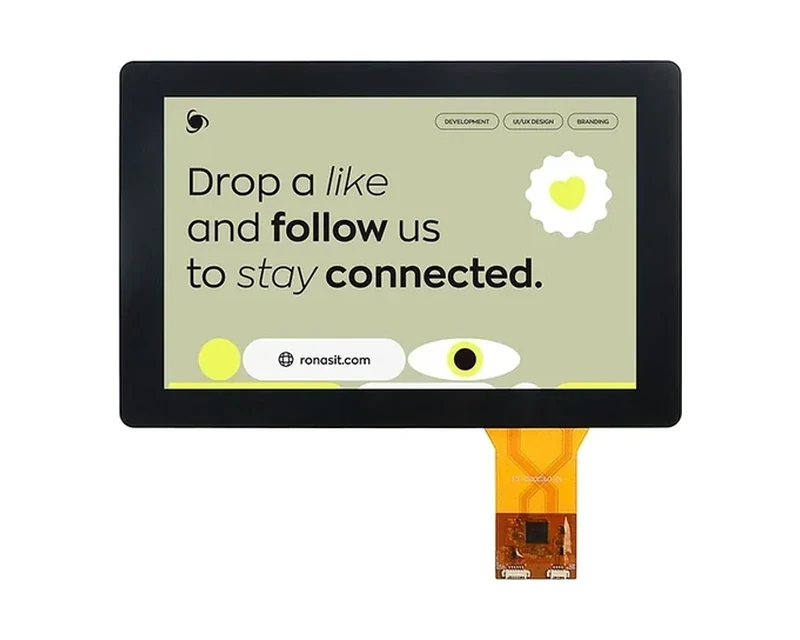
RG-T101HIEWA-01CP
RG-T101HIEWA-03
RG-T101BFHA-01
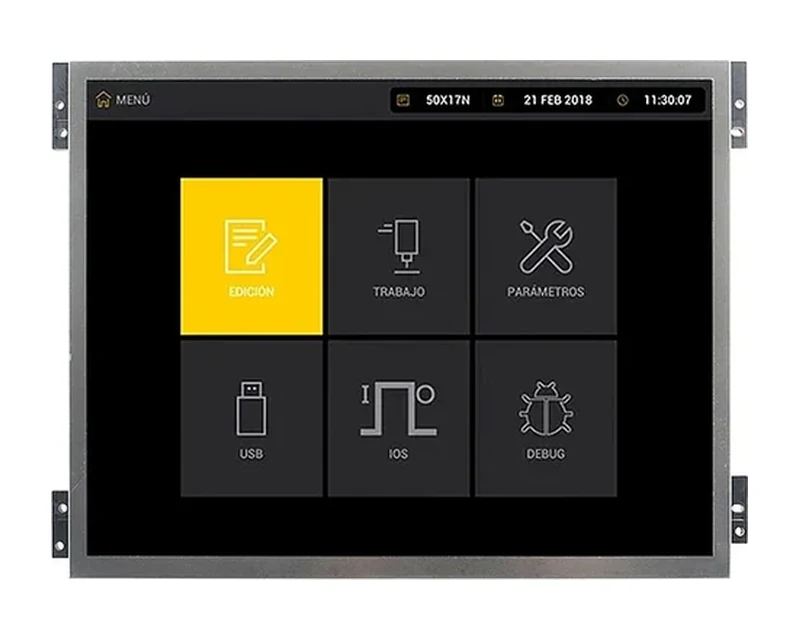
RG-T104QXHA-03
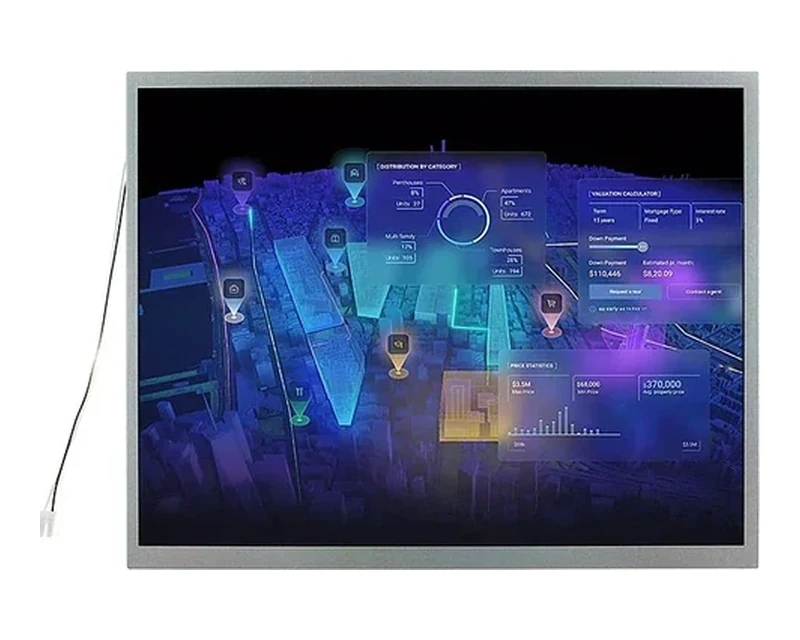
RG-T121QXHA-01
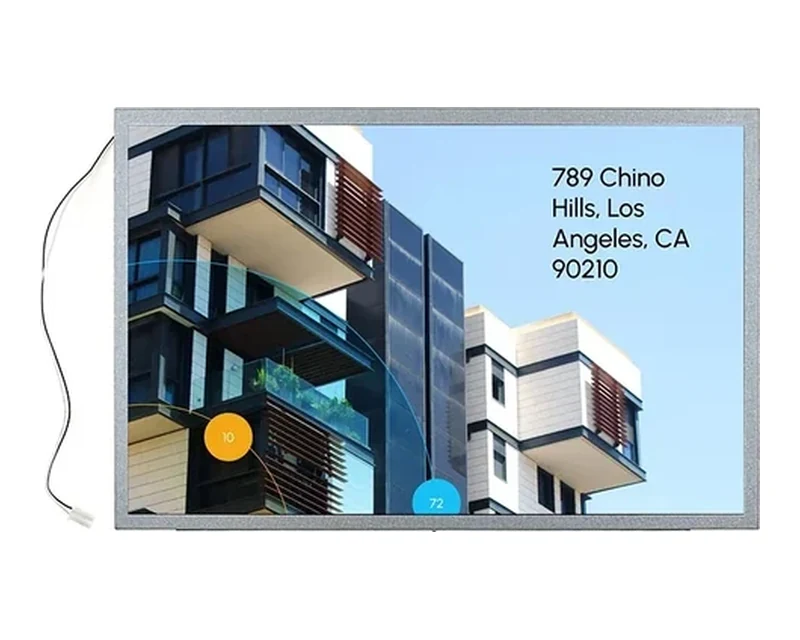
RG-T121BIHA-01
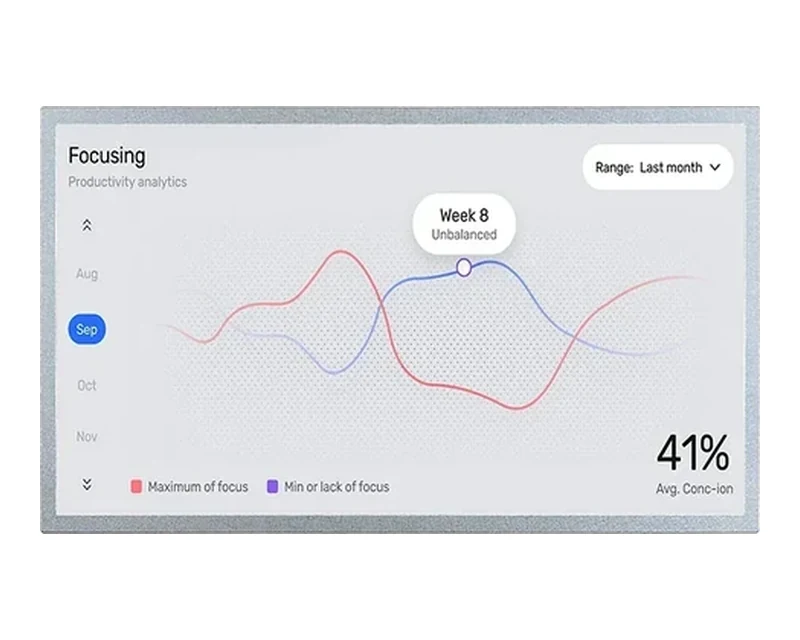
RG-T156QFHWA-01
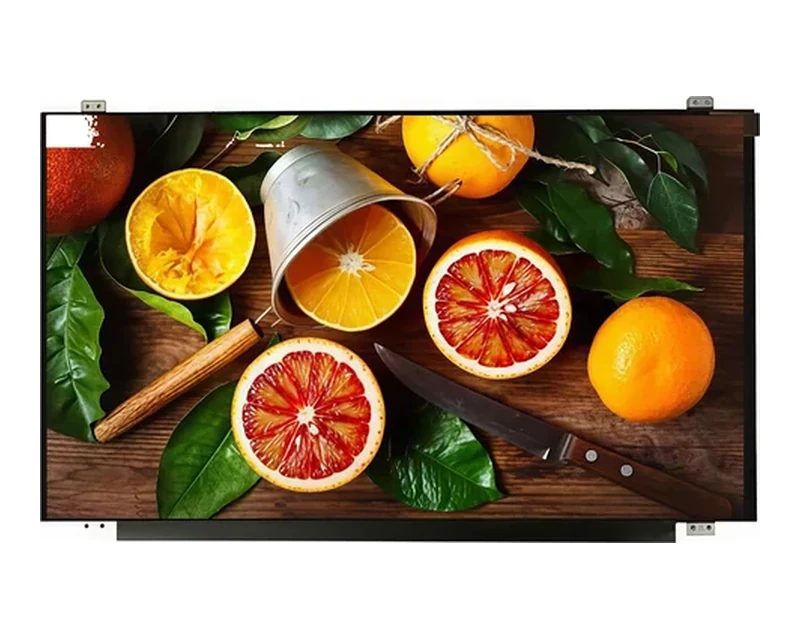
RG-T156BFHWA-02
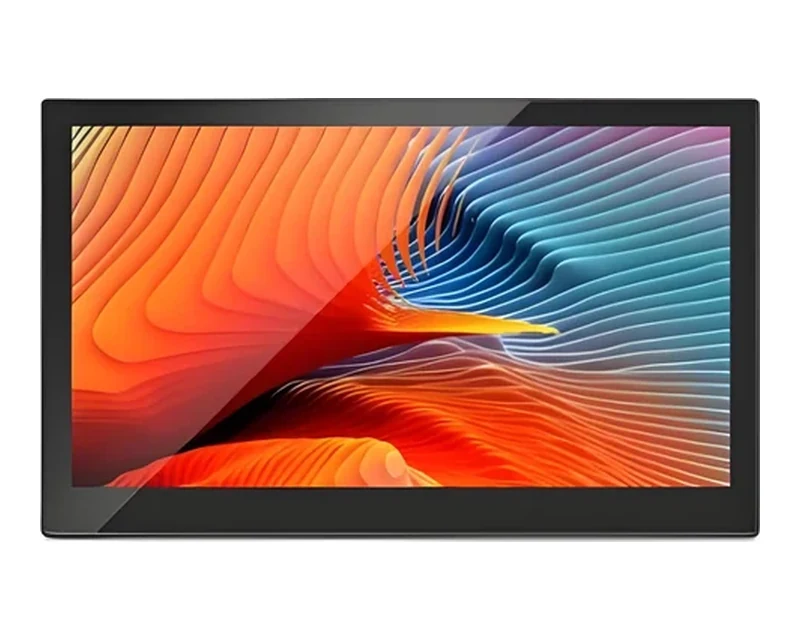
RG-T156BFHWA-02CP
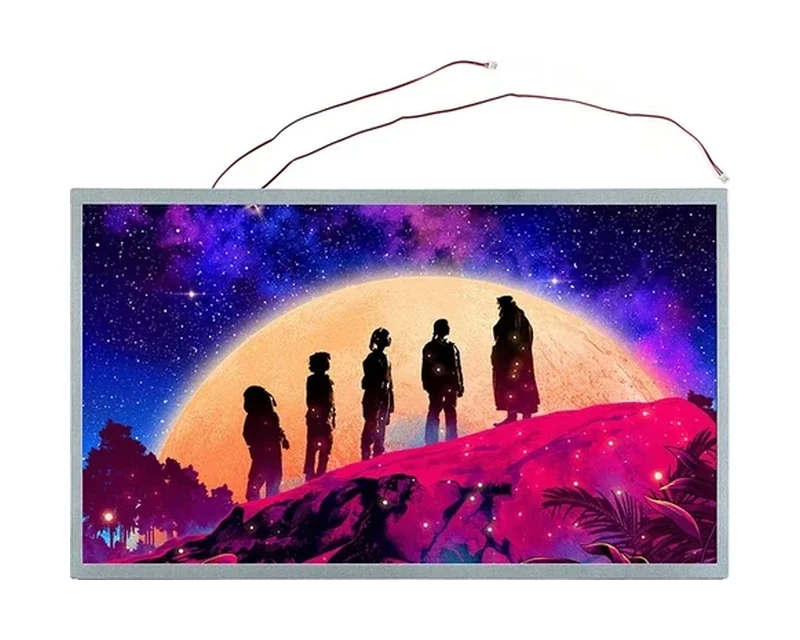
RG-T185BFHWA-02
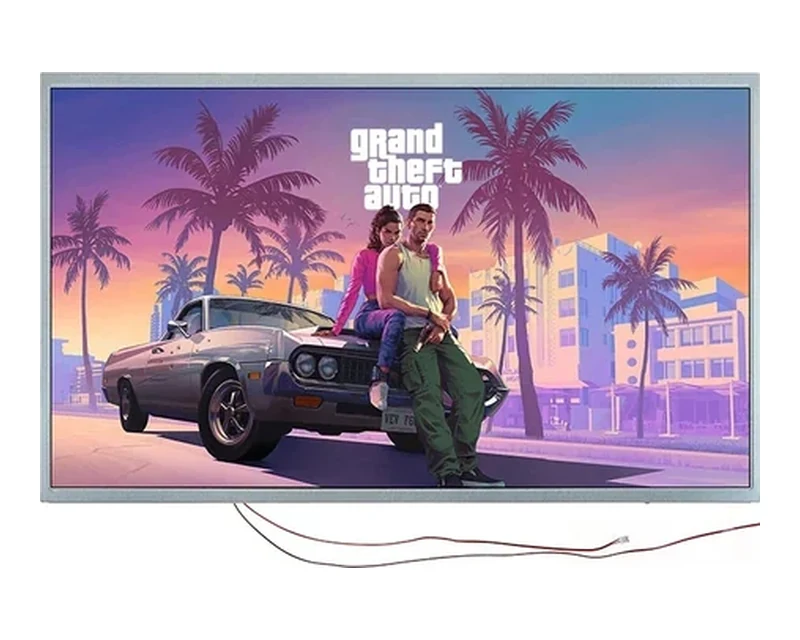
RG-T215BFHA-02
Can’t find the exact model you need?
This is a standard model, and our online catalog shows only part of what we build. We hold additional models not listed here, and we can adjust brightness, interface, touch or outline within an existing product family, or evaluate a fully custom solution. If this model does not fully match your requirements, please email your specifications to sales@odmlcd.com. We’ll help you identify the right part or assess a custom option.
FAQ
Are the modules sunlight readable?
Yes. RONEN offers a high-brightness line up to 1500 nits (23 standard models ≥1000 cd/m²) with optional optical bonding and transflective solutions that keep the image legible under direct sunlight. For outdoor HMI, pair high brightness with a bonded cover lens and anti-glare treatment.
Browse sunlight-readable displays or tell us your ambient-lux target on the contact page.
Do wide-temperature modules really operate -30°C to +85°C?
Yes. 33 standard models are rated for -30°C operation (storage down to -40°C, with the extended range qualified to +85°C / -40~+90°C on request). Each lot ships with temperature-cycle verification, and a third-party high-low temperature cycling report (≥500 cycles, -40~+90°C) is available on request.
See the wide-temperature display line.
What about warranty and after-sales?
Standard warranty is 12 months. Annual RMA return rate is kept ≤0.75%, and a failure-analysis (FA) report is delivered within confirmed per project in writing of receipt. We support your field returns with root-cause analysis, not just replacements.
Is 850 cd/m² enough for a window-facing screen?
Behind tinted or coated glass, and at an oblique angle to the window, yes. Facing the window with an untreated glossy front, no — reflected daylight will dominate the black level and the image will look grey regardless of the panel. In that position the working combination is 1000–1500 cd/m² plus an anti-reflective front treatment, and the treatment usually contributes more than the extra nits.
Do you supply panels with the touch already integrated?
Touch-integrated variants exist for the smaller diagonals in this range; the larger signage sizes are normally supplied without touch because the interaction happens on a phone or a separate keypad. Where a totem does need touch, the sensor is bonded to the panel and the front glass is laminated over it as an ODM assembly.
How long will a signage panel last at 16 hours a day?
Backlight life is quoted to a luminance fraction — commonly L70 at 30,000–50,000 hours, which at 16 hours a day is five to eight years before the panel falls to 70% of its initial brightness. Driving below maximum luminance extends that materially, which is why a 1500 cd/m² panel run at 700 cd/m² is a better long-term choice than a 700 cd/m² panel run flat out.
Can the same panel be used portrait and landscape?
Only if it is specified for both. The polariser and LC alignment are set for one orientation, and rotating a landscape-rated panel into portrait can cost contrast at the top edge and produce a dark screen for viewers in polarised sunglasses. Ask for the portrait-rated part number rather than rotating the enclosure.
What is the realistic lifetime of a panel in a sealed outdoor totem?
It is set by temperature, not by hours. A sealed totem in sun can run 20 °C above ambient internally; a wide-temperature panel rated to +80 °C survives that, a standard +70 °C part derates its backlight and yellows at the edges. Shade, IR-blocking front glass and convection vents extend life more than any electronic feature.