
POS & Payment Terminal Display Modules — 3.5″–7.0″ CTP | RONEN
Checkout counters and handheld payment terminals need compact capacitive screens with crisp text for receipts, PIN pads and signatures. RONEN offers 29 CTP-integrated TFT modules from 3.5″ to 7.0″ at 320x240–1024x600 resolution and 250–1000 cd/m², with tight FPC routing for slim terminal housings. Samples follow the agreed project plan.
- 29 capacitive-touch modules sized for terminals and PIN pads
- MIPI / RGB / MCU interfaces for slim terminal SoCs
- Custom cover lens and bonding for rugged retail use
Three Positions in One Store, Three Different Panels
The word “POS display” covers three jobs that share a counter but not a specification. A PIN pad is read at 30–40 cm by a thumb; a cashier screen is read at 50–60 cm through a cover glass that catches ceiling downlights; a customer-facing signature pad is read under shopfront glare. The 29 modules in this range split across those jobs, and the most common sourcing mistake is to buy one part for all three and then discover the brightness or the touch stack does not travel.
| Position | Size that fits | Resolution floor | Luminance | What actually breaks first |
|---|---|---|---|---|
| PIN pad / handheld payment terminal | 3.5″–4.3″ | 320×240 for amounts, 480×800 for soft-key layouts | 250–500 cd/m² | Pocket abrasion on the cover lens; FPC bent around a 90° corner inside a 20 mm housing |
| Cashier-facing main screen | 7.0″ | 1024×600 | 400–700 cd/m² | Downlight reflection across the top third of the glass; heat from the terminal SoC behind the panel |
| Customer-facing display and self-order | 5.0″–7.0″ | 800×480 minimum for signatures | 700–1000 cd/m² | Daylight through the shopfront; finger grease on an uncoated lens |
The practical consequence: specify the position first, then the diagonal. A 7.0″ panel at 400 cd/m² is comfortable under a cashier canopy and unreadable on a window-facing counter at 3 pm.
What Resolution Buys You at Arm’s Length
Signature capture is the resolution-critical task in a payment terminal, not text. A signature stroke is 1.0–1.5 mm wide; below roughly 2 px per stroke the captured curve turns into a staircase and the acquirer’s signature-matching may reject it. That sets a floor of about 130 PPI at the glass, which in this family means:
| Diagonal | Resolution | Pixel density | Pixel pitch |
|---|---|---|---|
| 3.5″ | 320×240 | 114 PPI | 0.22 mm pixel pitch |
| 3.5″ | 480×320 | 165 PPI | 0.15 mm pixel pitch |
| 3.5″ | 640×480 | 229 PPI | 0.11 mm pixel pitch |
| 3.97″ | 480×800 | 235 PPI | 0.11 mm pixel pitch |
| 4.3″ | 480×272 | 128 PPI | 0.2 mm pixel pitch |
| 5.0″ | 800×480 | 187 PPI | 0.14 mm pixel pitch |
| 7.0″ | 800×480 | 133 PPI | 0.19 mm pixel pitch |
| 7.0″ | 1024×600 | 170 PPI | 0.15 mm pixel pitch |
Two conclusions follow. First, 320×240 at 3.5″ is a text-only part — fine for an amount and a PIN prompt, marginal for a signature. Second, 800×480 at 7.0″ already clears the 130 PPI signature floor at 133 PPI, so a countertop display needs no more resolution than a handheld: what it needs is brightness and a wider cone. 480×800 at 3.97″ is where the extra resolution earns its keep — 235 PPI against 133 — and it matters for the small print on a receipt preview rather than for the signature curve. Touch sampling in this family runs at 100 Hz or better, which is what keeps the signature curve smooth rather than the pixel count alone.
The Cover Lens Decides Touch Performance
Every module here is a CTP part, but the touch sensor sits behind whatever glass the terminal designer puts in front of it. Three numbers govern the result:
- Lens thickness. Chemically strengthened glass at 0.7–1.1 mm is the retail norm. Each additional millimetre of glass costs signal-to-noise at the sensor; past roughly 3 mm of total stack the controller needs retuning or a higher-gain sensor, not just a firmware tweak.
- Bonding method. An air gap between lens and panel is cheap and survives service, but it adds two reflective surfaces and traps dust in the border. Optical bonding (OCA or LOCA) removes the internal reflections and makes the image look like it is painted on the glass — which is what a “flush black front” terminal is actually selling.
- Surface treatment. An anti-glare etch scatters the downlight that would otherwise mirror a ceiling fixture into the cashier’s eyes. It slightly softens the image; for a payment terminal that is a good trade, for a signature pad it is usually not needed.
Running 24/7: Backlight Life and the Cost of 1000 cd/m²
A busy counter display is on for the length of the trading day and often never switched off. Backlight LEDs are rated to a fraction of initial luminance — a typical L70 figure of 30,000 hours is about 3.4 years of continuous operation, and 50,000 hours about 5.7 years. Two design choices move that number:
Driving at 1000 cd/m² instead of 400 cd/m² costs roughly 2.5× the LED current and therefore shortens life at a given junction temperature; the panel also dumps that extra power into a sealed terminal housing. If the terminal sits under a canopy, 500 cd/m² with a good anti-glare lens will outperform 1000 cd/m² with a glossy one, at half the thermal load.
Dimming matters too. PWM dimming below about 2 kHz beats against a phone camera or a barcode scanner and shows as rolling bands in the captured frame; for terminals with a scanner in the same housing, ask for a higher dimming frequency or analogue dimming. Night mode on a customer-facing panel should sit around 120–200 cd/m² — bright enough to read, dim enough not to glow across a dark shop.
EMI in the Basket: Card Readers, Hubs and Wi-Fi
Contactless payment puts a 13.56 MHz coil within a few centimetres of the display FPC. In practice the failure mode is not a dead touch panel but a drifting one: the baseline capacitance shifts when the reader field is active, and a fixed threshold starts reporting phantom touches near the antenna corner. Mitigations that cost nothing at design time:
- Route the touch FPC away from the reader antenna and keep its ground return short and wide.
- Keep the display FPC away from the DC–DC inductor; a 2 MHz switcher couples readily into an unshielded 30–50 mm flex.
- Specify a controller that supports baseline re-calibration during idle, so a shift is absorbed rather than latched.
- Ground the cover-lens shield layer (if present) to the terminal chassis, not to the display ground, to keep ESD current out of the controller.
Interface and FPC: Fitting a 7-Inch Panel Into a 9 mm Bezel
The interface choice at this size is driven by pin budget more than bandwidth. A 24-bit RGB panel needs 28 signals plus power; LVDS needs 4–8 differential pairs; MIPI-DSI needs 1–4 lanes. On a 3.5″ handheld the SoC usually offers MIPI only, so the panel is either MIPI-native or fed through a bridge — and a bridge chip is 3 mm of extra board height plus another oscillator to place away from the radio.
Mechanically, three details decide whether the module fits: the FPC exit edge (long side or short side), the bend direction relative to the stiffener, and the connector height on the main board. A flex folded back on itself without a stiffener creases at the bend line and fails in the field after a few thousand key presses; specify a bend radius of at least 1.5 mm and keep the fold outside the connector footprint.
The Range at a Glance
Grouped by diagonal, with the resolutions and panel types actually stocked in each group. Counts are the number of standard models in this family, not the number of sizes.
| Size | Models | Resolutions in this range | Panel / touch variants | Where it usually goes |
|---|---|---|---|---|
| 3.5″ | 5 | 320×480, 320×240, 640×480 | IPS 3 / TN 2 | PIN pad, handheld terminal |
| 3.97″ | 2 | 480×800 | IPS 2 | Slim handheld, soft-key layout |
| 4.3″ | 5 | 480×272, 800×480 | IPS 4 / TN 1 | PIN pad with signature area |
| 5.0″ | 5 | 800×480 | IPS 4 / TN 1 | Compact customer display |
| 7.0″ | 12 | 800×480, 1024×600 | TN 9 / IPS 3 | Cashier screen, self-order |
Standard Modules in This Range
29 standard models in this family
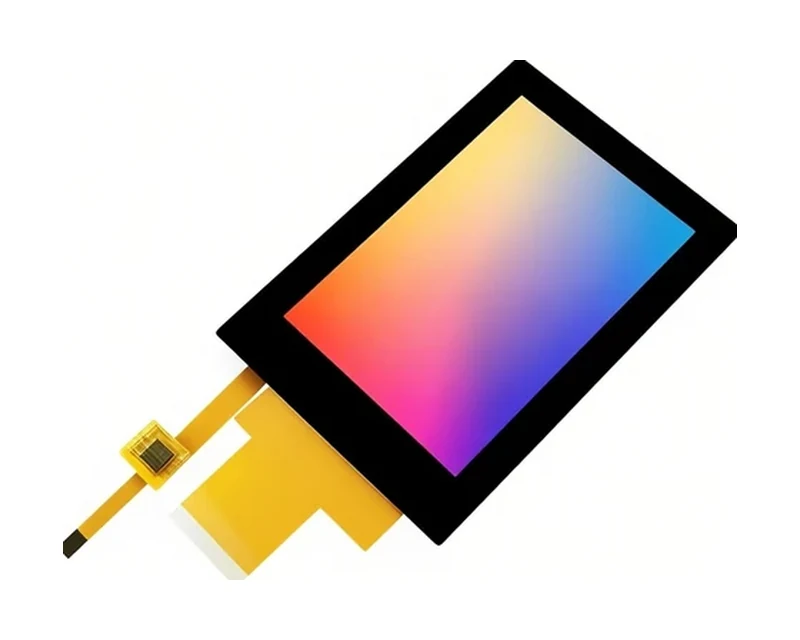
RG-T035QHI-03CP
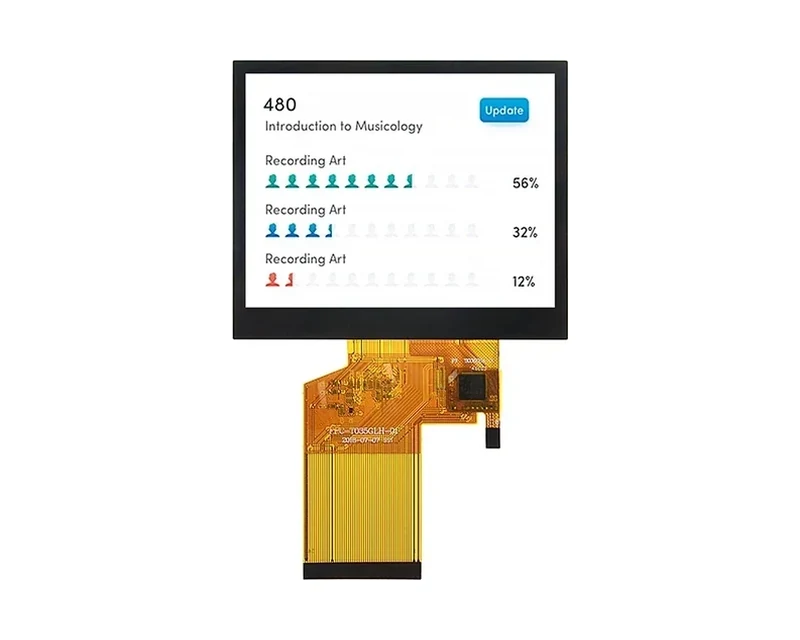
RG-T035GLH-01CA
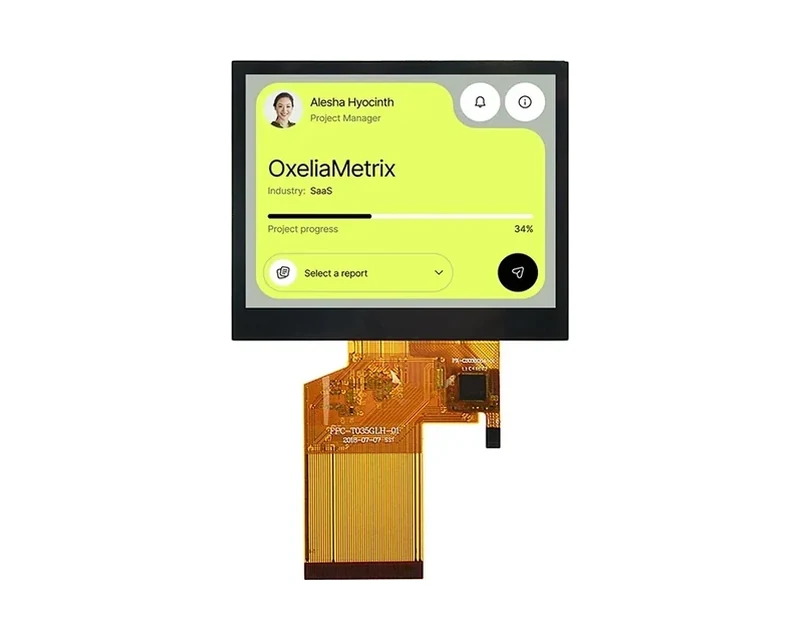
RG-T035GLH-02CA
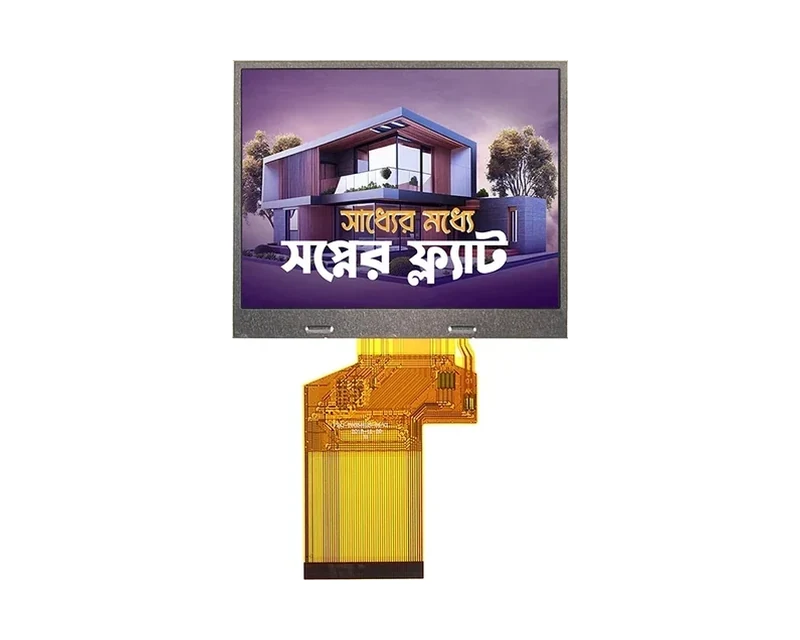
RG-T035HLS-01CP
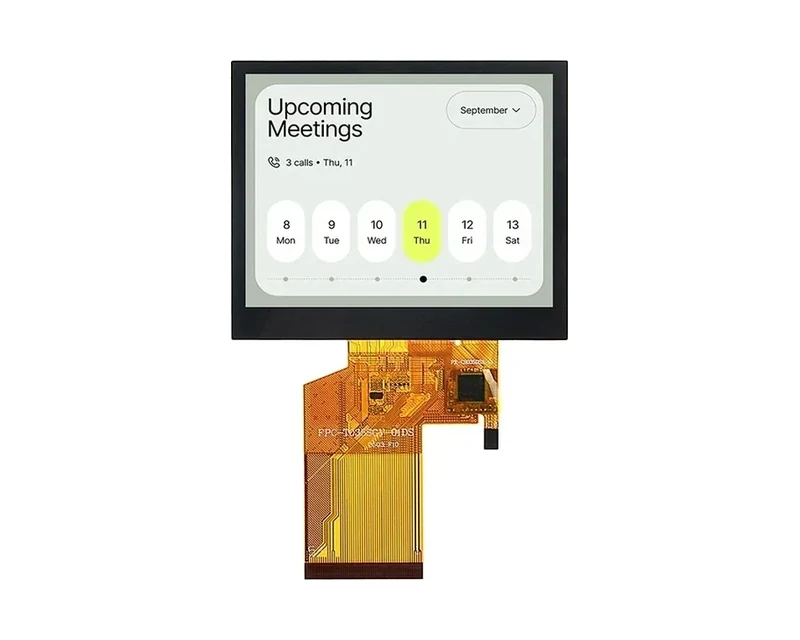
RG-T035SGV-01CP
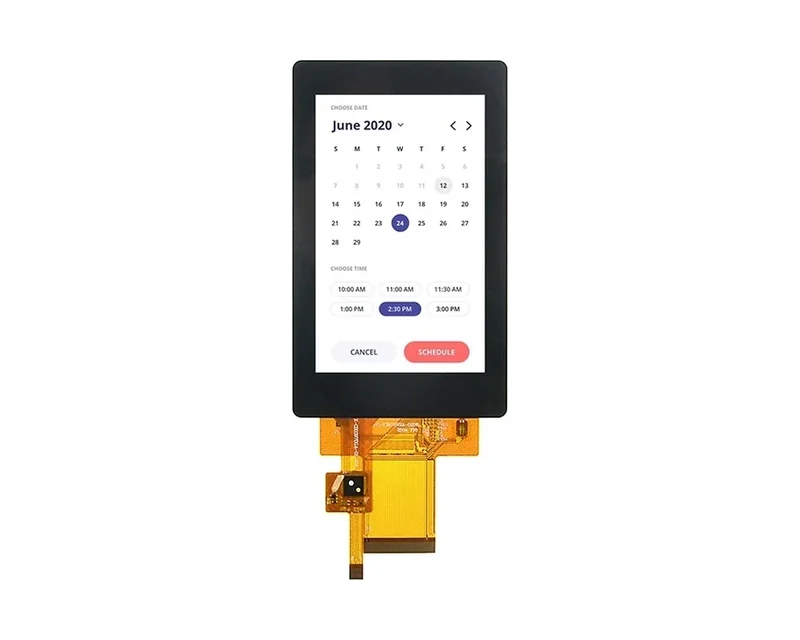
RG-T0397BVSA-02CP
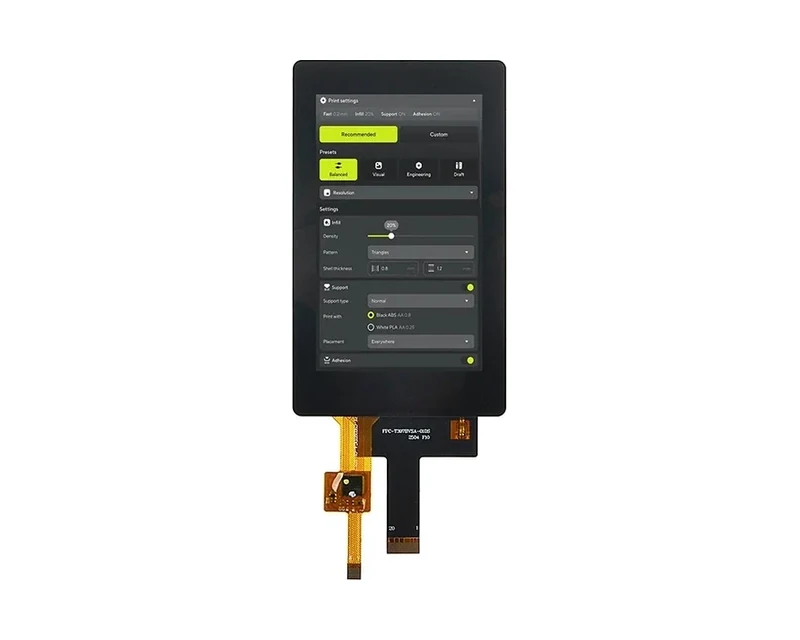
RG-T0397BVSA-01CP
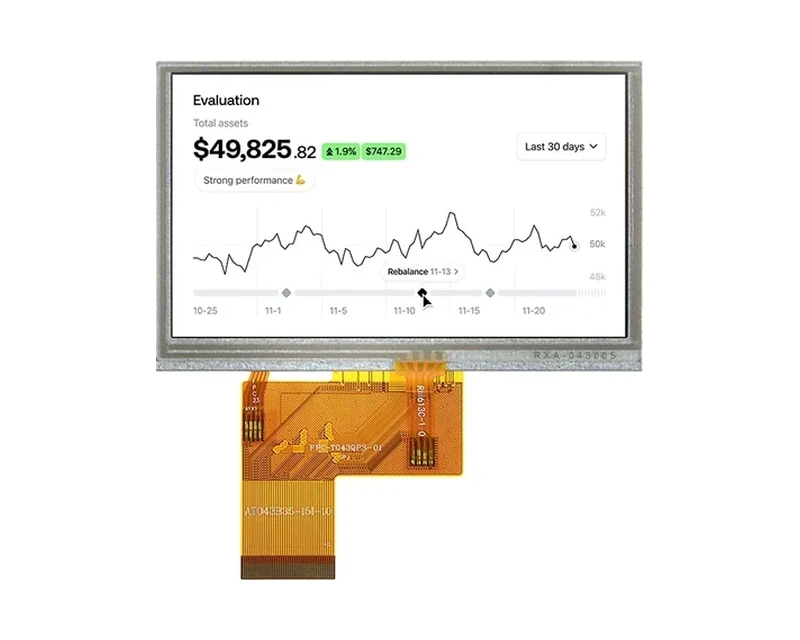
RG-T043QPS-02CA
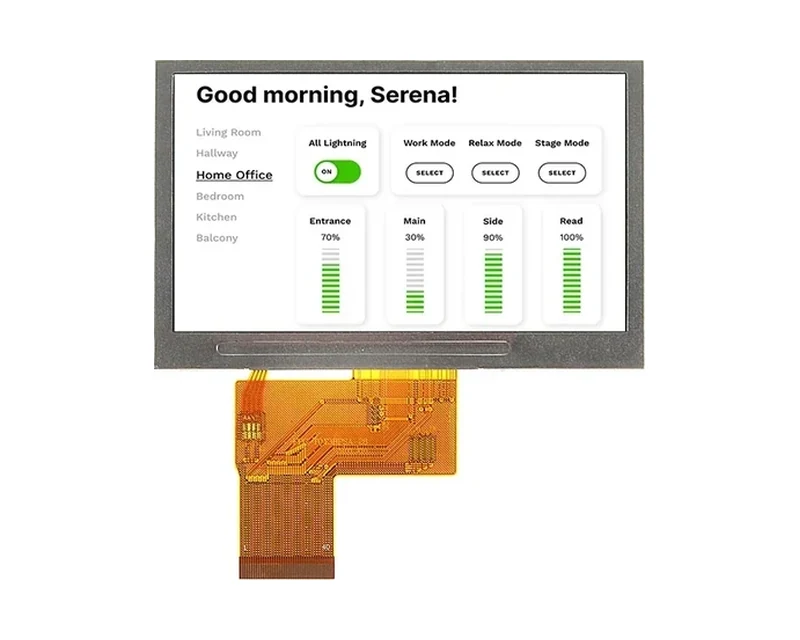
RG-T043BPSA-01CA
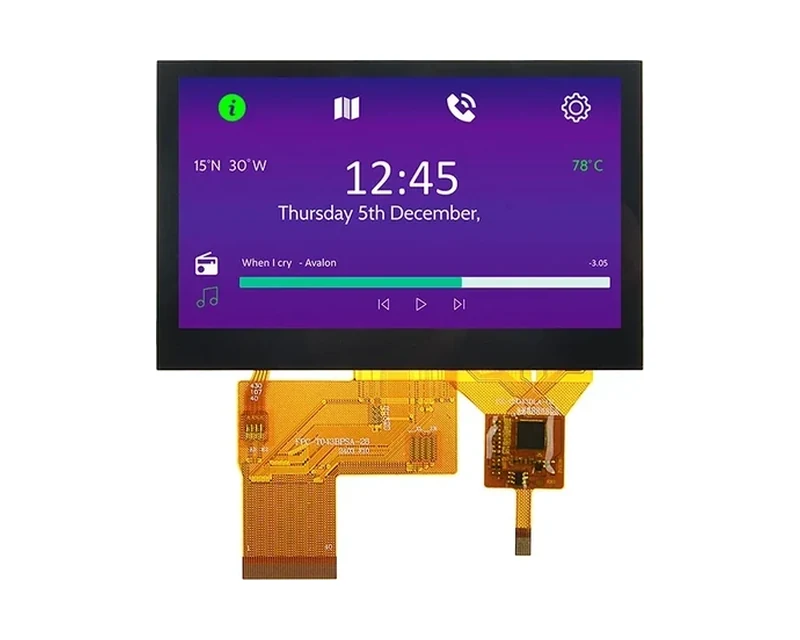
RG-T043BPSA-02CP
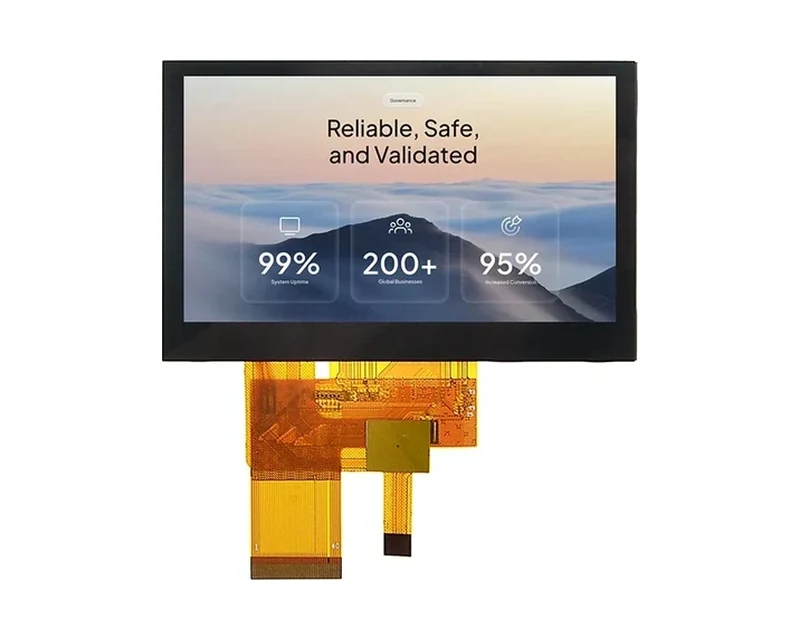
RG-T043BWSA-02CP
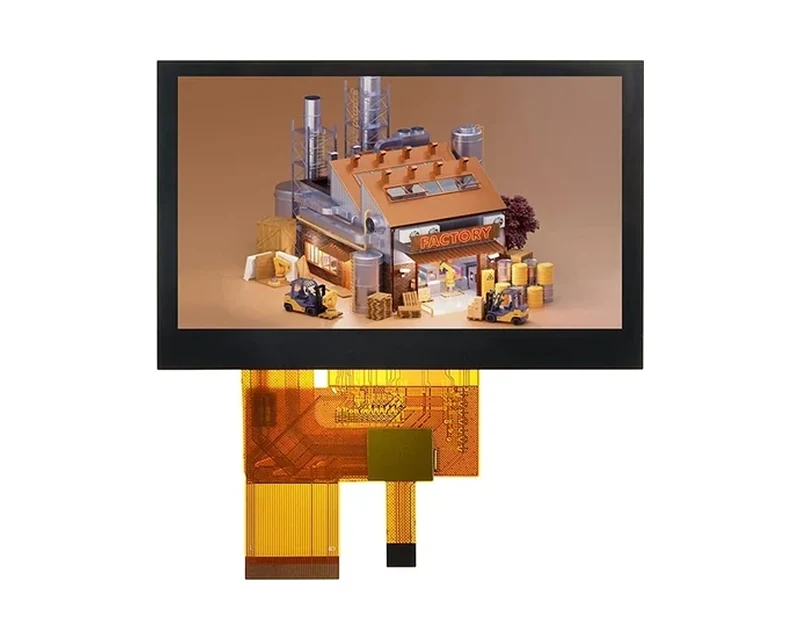
RG-T043BWSA-28CP
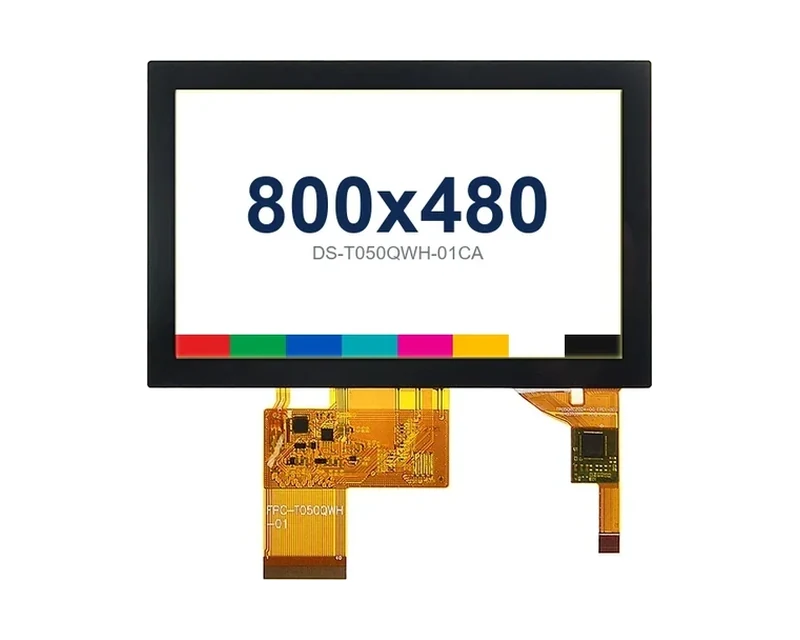
RG-T050QWH-01CA
RG-T050BWSA-30CP
RG-T050BWSA-02CP
RG-T050BWSWA-02CP
RG-T050BWSWA-02CA
RG-T070QWE-01AD
RG-T070QWHW-01CA
RG-T070QWHW-02
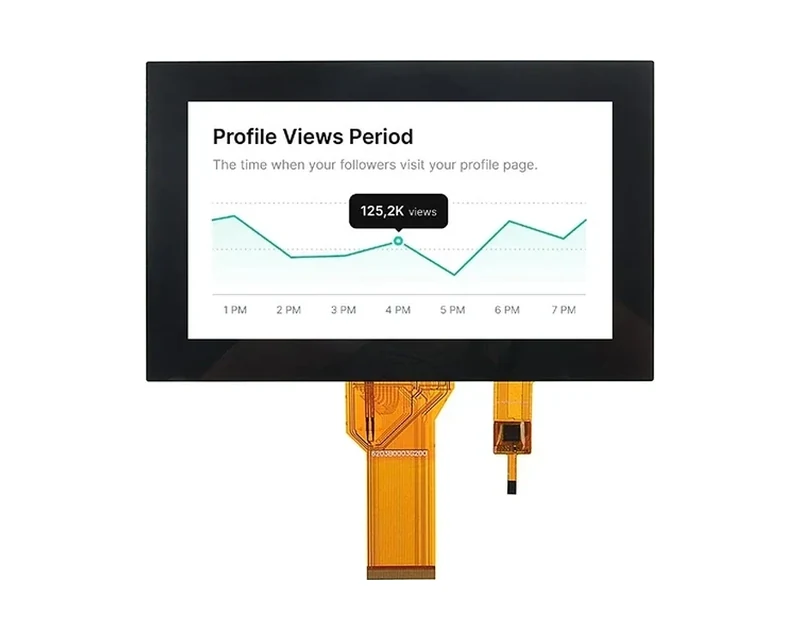
RG-T070QWHW-02CA
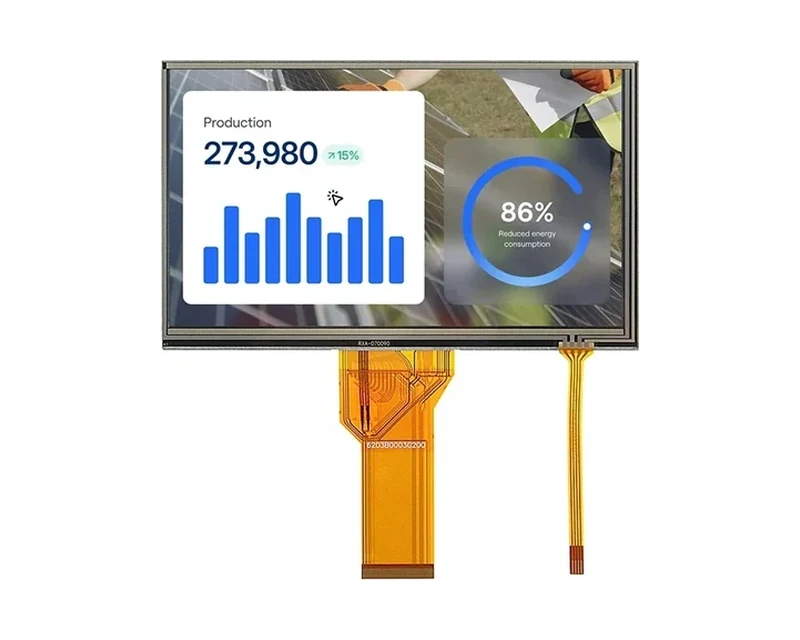
RG-T070QWHW-03CA
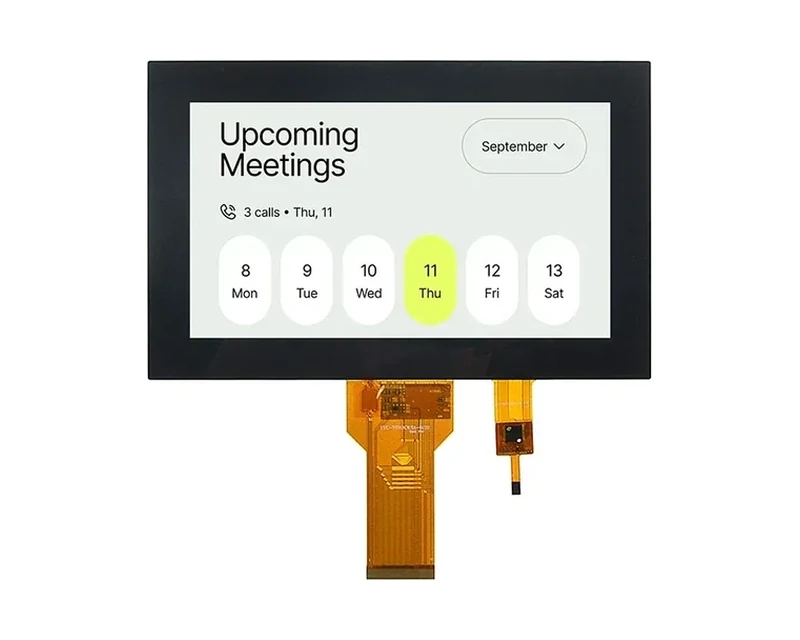
RG-T070KWSA-01CA
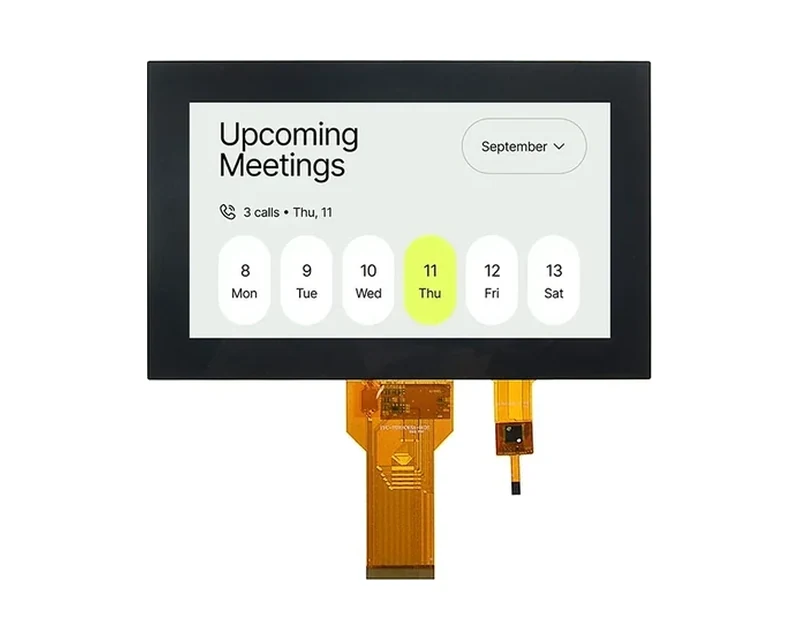
RG-T070KWSA-01CP
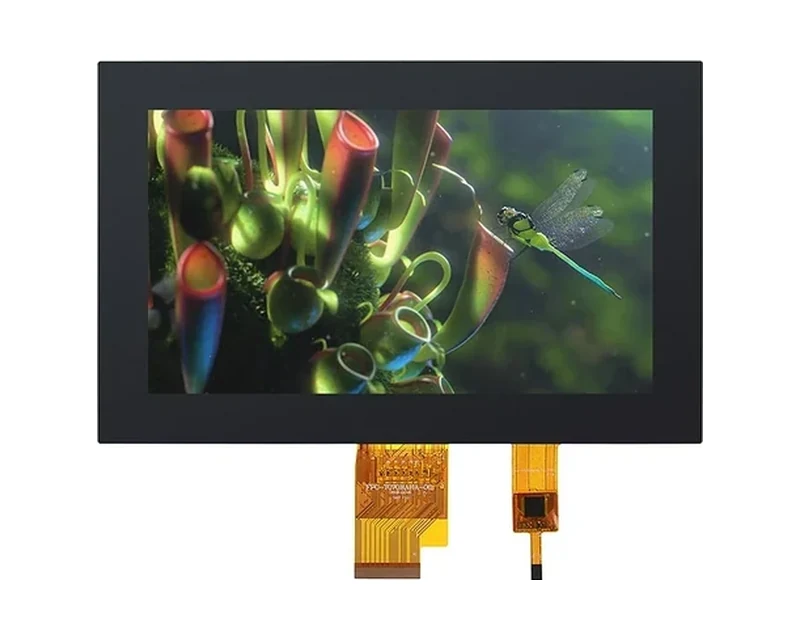
RG-T070BAHA-01CA
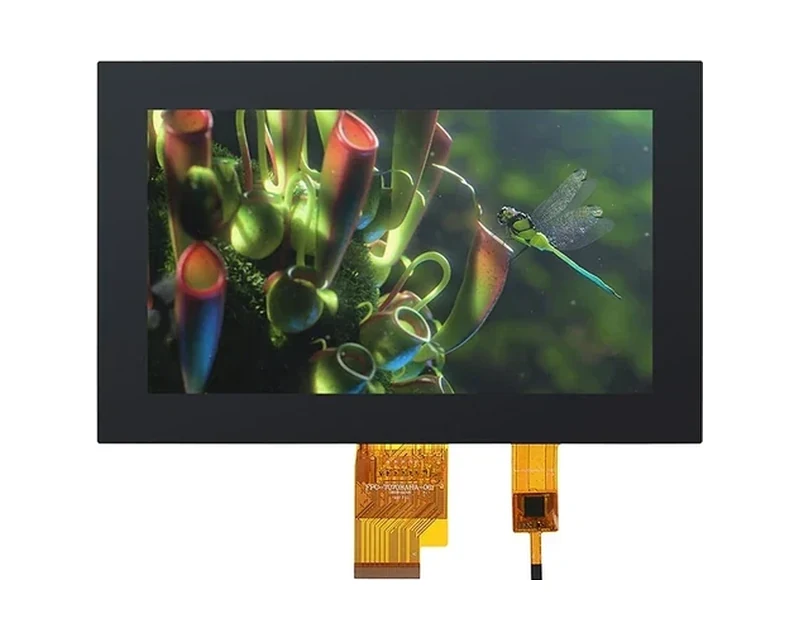
RG-T070BAHA-01CP
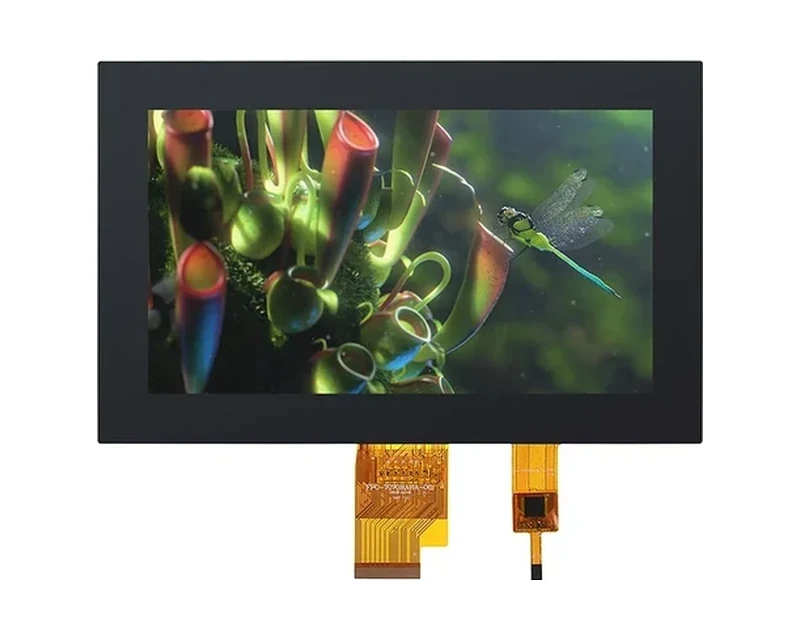
RG-T070BAHA-03CA
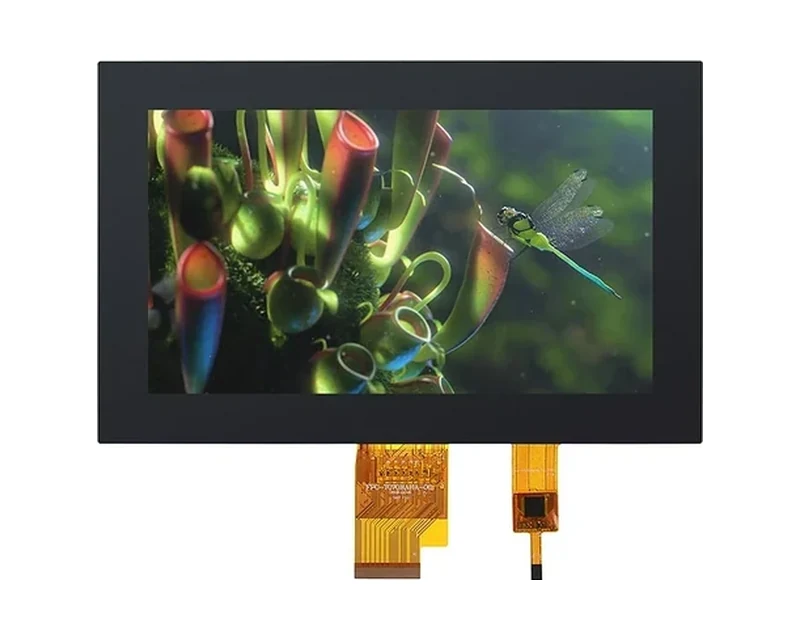
RG-T070BAHA-03CP
RG-T070BAHA-19CA
Can’t find the exact model you need?
This is a standard model, and our online catalog shows only part of what we build. We hold additional models not listed here, and we can adjust brightness, interface, touch or outline within an existing product family, or evaluate a fully custom solution. If this model does not fully match your requirements, please email your specifications to sales@odmlcd.com. We’ll help you identify the right part or assess a custom option.
FAQ
Is the touch responsive?
Our PCAP line supports 10-point multi-touch with stylus and light-touch tuning, with ≥100 Hz sampling rate. Controllers are selected for counter-top EMI environments (card readers, displays, POS hubs) and can be tuned for the cover-lens stack-up of a slim terminal.
What are the order quantities and stock?
All 190+ standard models are held in our standard program, so you can order exactly the quantity your build needs, from prototype runs to volume production. Custom / ODM builds are quoted case by case (typically 10–500 pcs) with volume-based pricing — tell us your volume and we'll quote.
How fast can you deliver?
Typical prototype / sampling cycle is confirmed per project in writing and mass-production lead time is confirmed per project in writing, with an on-time delivery (OTD) rate of 96.5%. Expedited sampling is available for NPI programs.
Can one module serve both a handheld and a countertop terminal?
Mechanically, no: the handheld needs a short-side FPC exit and a 3.5″–4.3″ outline, while the countertop unit needs 7.0″ and a long-side exit to reach the main board. Electrically the interfaces overlap, so the same SoC family can drive both — but they will be two part numbers, and treating them as one usually ends with a bracket that cannot be closed.
Does a screen protector ruin capacitive touch?
A 0.1–0.3 mm tempered film barely changes the signal and normally needs no retuning. The problems start with thick (0.5 mm+) films, air bubbles under the adhesive, or a film that covers the sensor border: each of those lowers the baseline capacitance and can make the edge keys drop out. If the terminal ships with a protector, send us its thickness and adhesive type and the controller tuning will be set for the final stack, not the bare panel.
Is 250 cd/m² enough for a checkout counter?
Under a canopy or in a normal indoor lighting level of 300–500 lux, yes — 250 cd/m² gives a comfortable image at 40 cm. It stops being enough when the panel faces a window, a downlight, or an unshaded shopfront: reflected ambient light adds to the black level, and the effective contrast collapses. For any position within about 3 m of a shopfront, start at 700 cd/m² and add an anti-glare lens.
How do you keep the display readable when the cashier tilts it away?
Choose the panel type for the angle, not just the size. TN parts in this range are the cheapest per unit, but their viewing cone is asymmetric — tilting the screen 30° away from the cashier can invert contrast at the top of the image. IPS holds colour and contrast across roughly 80° in each direction. The 7.0″ group is mostly TN because most countertop mounts are fixed head-on; if the screen will be tilted or read from the side, take one of the three IPS parts at 7.0″.
What has to be decided before an ODM cover lens is quoted?
Five things: outline and corner radius, glass thickness and strengthening, the print pattern (border width, window cut, any icon apertures), the bonding method, and the surface treatment. Send those and the panel part number together — a lens designed against a generic 7.0″ outline will not fit a specific module’s active area and FPC keep-out.