
Elevator TFT Display Modules — Floor Indicators, COP & Hall Stations | RONEN
Elevator displays run around the clock for the life of the building. RONEN supplies 2.8″ to 18.5″ TFT modules for hall lanterns, car operating panels and car information screens — wide-temperature ratings for machine-room-less drives, the interface options a travelling cable needs, and catalogue supply continuity so a car commissioned today can still be serviced in its twentieth year.
- 2.8″ to 18.5″ across hall station, COP and car information positions
- 30 of 33 models rated from −30 °C for cold pits and unheated entrances
- 13 LVDS variants for cable runs that travel with the car
- 9 CTP and 2 RTP options for gloved or wet-hand operation
What an Elevator Installation Actually Asks of a Display
An elevator shares almost nothing with a factory-floor installation apart from the panel itself. Three facts about the shaft decide most of the specification, and none of them appear on a generic TFT datasheet.
The traction drive is a switching inverter. Conducted and radiated disturbance from a lift drive is covered by EN 12015 for emission and EN 12016 for immunity, and a display whose flex cable is routed alongside the motor cable will show it — horizontal banding, a backlight that dips as the car accelerates. The countermeasure lives in the cable and the grounding, not in the panel, which is why two integrators can use the same module and get different results.
The cable moves with the car. A travelling cable bends with every trip, and a car in normal service accumulates on the order of a million flex cycles over its life. A 24-bit parallel RGB link puts roughly twenty-eight conductors plus power through that bundle, and the failure concentrates at the connector crimp. An LVDS link carries the same picture in four to eight differential pairs. This is the single most common interface decision that gets revisited after the first prototype.
Temperature is not uniform in a shaft. The machine room, or the top of a machine-room-less shaft, runs warm. The pit runs cold in winter. A module rated to −20 °C that behaves perfectly in a Dubai lobby will fail to start in an unheated European pit, and the difference is one line on the datasheet.
Two further constraints come from the panel itself rather than the environment. A COP is a thin assembly on a finished wall, so the module plus touch stack plus controller has to fit a depth the architect has already fixed. And the surface is touched by everyone: bare hands, gloves in a hospital, wet hands at a pool entrance.
Where a lift is to be placed on the market as a complete unit, the type examination under EN 81-20 and EN 81-50 is held by the lift manufacturer, and accessibility requirements fall under EN 81-70. RONEN supplies module-level datasheets, drawings and material declarations that feed that qualification file. We do not represent a bare display module as certified lift equipment.
Matching the Module to the Fixture
One building uses very different displays in different places, and collapsing them into a single requirement is the most common specification error. A hall lantern and a car operating panel do not share a brightness target, a touch requirement or a service life expectation.
| Position on the installation | Typical size | Touch | Luminance target | What actually decides the choice |
|---|---|---|---|---|
| Hall lantern / landing operating panel (LOP) | 2.8″ to 4.3″ | None — mechanical buttons sit alongside | 700 cd/m² and up | Daylight through a glazed lobby; a passenger reads it from an angle, standing off to one side |
| Car operating panel (COP) | 7.0″ to 10.1″ | CTP, occasionally RTP | 400 to 700 cd/m² | Panel depth behind the faceplate, gloved or wet hands, vandal resistance |
| Car information screen | 10.1″ to 18.5″ | Usually none | 500 to 1000 cd/m² | Continuous duty, backlight life, and how much of the image is static |
| Machine room, landing and accessibility displays | 2.8″ to 7.0″ | None | 300 to 500 cd/m² | Legibility at distance rather than brightness; contrast for low vision |
The counter-intuitive one is brightness. The hall display needs more of it than the car panel, because the landing sits in daylight through a glazed entrance while the car interior is lit to a few hundred lux. Specifying 1000 cd/m² for a COP buys heat and backlight current that the panel has to dissipate inside a sealed faceplate, and buys nothing the passenger can see. Specifying 300 cd/m² for a lobby display produces a screen that is readable at night and blank at noon.
The car information screen is the opposite trade. It runs continuously, often with a large static region — a floor number, a building logo, a notice strip — so its constraint is backlight life and image retention rather than peak luminance.
The Standard Range, by Specification
Every line below is a catalogue part with a datasheet behind it. Sizes run 2.8″ to 18.5″, luminance 250 to 1500 cd/m², and the interface split across the range is 17 parallel RGB, 13 LVDS and 2 MIPI DSI. 30 of the 33 modules are rated from −30 °C, and 4 of the 33 stop at +70 °C at the upper end — those suit a car or enclosed position where the ambient is controlled rather than a shaft.
| Model | Size | Resolution | Panel | Luminance | Interface | Operating temp. | Touch |
|---|---|---|---|---|---|---|---|
| RG-T028GQSW-01 | 2.8″ | 240x320 | TN | 350 cd/m² | RGB/MCU/SPI 50PIN | −30 to +80 °C | — |
| RG-T028BQSWA-01 | 2.8″ | 240x320 | IPS | 350 cd/m² | RGB/MCU/SPI | −30 to +85 °C | — |
| RG-T034BOIA-01 | 3.4″ | 800x800 | IPS Round | 1000 cd/m² | 4 lane MIPI 30PIN | −20 to +70 °C | — |
| RG-T0345BHSA-01 | 3.45″ | 340x800 | IPS Bar | 400 cd/m² | RGB 18bit 40PIN | −20 to +70 °C | — |
| RG-T035HLWSA-01 | 3.5″ | 320x240 | IPS | 900 cd/m² | RGB 24bit 54PIN | −30 to +85 °C | — |
| RG-T035HLSWA-01 | 3.5″ | 320x240 | IPS | 1200 cd/m² | RGB 24BIT | −30 to +85 °C | — |
| RG-T043BPSWA-02 | 4.3″ | 480x272 | IPS | 700 cd/m² | 24BIT RGB | −30 to +80 °C | — |
| RG-T043BWSWA-02 | 4.3″ | 800x480 | IPS | 900 cd/m² | 24BIT RGB | −30 to +80 °C | — |
| RG-T050BWSWA-02 | 5″ | 800x480 | IPS | 1000 cd/m² | RGB 24bit 40PIN | −30 to +80 °C | — |
| RG-T050BWSWA-02CP | 5″ | 800x480 | IPS | 850 cd/m² | RGB 24bit 40PIN | −30 to +80 °C | CTP |
| RG-T050BWSWA-02CA | 5″ | 800x480 | IPS | 850 cd/m² | 24BIT RGB | −30 to +80 °C | CTP |
| RG-T070QWHW-01 | 7″ | 800x480 | TN | 550 cd/m² | RGB 24bit 50PIN Long FPC | −30 to +85 °C | — |
| RG-T070QWHW-01P | 7″ | 800x480 | TN | 480 cd/m² | RGB 24bit 50PIN Long FPC | −30 to +85 °C | RTP |
| RG-T070QWHW-01CA | 7″ | 800x480 | TN | 500 cd/m² | RGB 24bit 50PIN Long FPC | −30 to +85 °C | CTP |
| RG-T070QWHW-02 | 7″ | 800x480 | TN | 1000 cd/m² | RGB 24bit 50PIN Long FPC | −30 to +85 °C | CTP |
| RG-T070QWHW-02P | 7″ | 800x480 | TN | 850 cd/m² | RGB 24bit 50PIN Long FPC | −30 to +85 °C | RTP |
| RG-T070QWHW-02CA | 7″ | 800x480 | TN | 850 cd/m² | RGB 24bit 50PIN Long FPC | −30 to +85 °C | CTP |
| RG-T070QWHW-03CA | 7″ | 800x480 | TN | 400 cd/m² | RGB 24bit 50PIN Long FPC | −30 to +85 °C | CTP |
| RG-T070SWHWA-01 | 7″ | 800x480 | IPS | 1000 cd/m² | LVDS 6/8bit 20PIN | −30 to +85 °C | — |
| RG-T070SWHWA-02 | 7″ | 800x480 | IPS | 500 cd/m² | LVDS 6/8bit 20PIN | −30 to +85 °C | — |
| RG-T080BXEWA-01 | 8″ | 1024x768 | IPS | 300 cd/m² | LVDS 6/8bit 40PIN | −30 to +80 °C | — |
| RG-T080BXEA-01CP | 8″ | 1024x768 | IPS | 250 cd/m² | LVDS 6/8bit 40PIN | −30 to +80 °C | CTP |
| RG-T084BXJWA-01 | 8.4″ | 1024x768 | TN | 500 cd/m² | LVDS | −30 to +80 °C | — |
| RG-T101BYEA-01ND | 10.1″ | 800x1280 | IPS | 300 cd/m² | 4 lane MIPI 31PIN | −20 to +70 °C | — |
| RG-T101HIEWA-01 | 10.1″ | 1280x800 | IPS | 1000 cd/m² | LVDS 6/8bit 40PIN | −30 to +85 °C | — |
| RG-T101HIEWA-01CP | 10.1″ | 1280x800 | IPS | 850 cd/m² | LVDS 6/8bit 40PIN | −30 to +85 °C | CTP |
| RG-T101HIEWA-03 | 10.1″ | 1280x800 | IPS | 1000 cd/m² | LVDS 6/8bit 40PIN | −30 to +80 °C | — |
| RG-T101HIEWA-04 | 10.1″ | 1280x800 | IPS | 500 cd/m² | LVDS 6/8bit 40PIN | −30 to +80 °C | — |
| RG-T121QXHA-02 | 12.1″ | 1024x768 | IPS | 600 cd/m² | LVDS 6/8bit 30PIN | −30 to +70 °C | — |
| RG-T156QFHWA-01 | 15.6″ | 1920x1080 | IPS | 1000 cd/m² | LVDS 2channel 8BIT 40PIN | −30 to +85 °C | — |
| RG-T156BFHWA-02 | 15.6″ | 1920x1080 | IPS | 1000 cd/m² | LVDS (2 channel, 8-bit) | −30 to +80 °C | — |
| RG-T156BFHWA-02CP | 15.6″ | 1920x1080 | IPS | 850 cd/m² | — | −30 to +80 °C | CTP |
| RG-T185BFHWA-02 | 18.5″ | 1920x1080 | IPS | 1500 cd/m² | LVDS 2channel 30PIN | −30 to +80 °C | — |
Where a fixture needs a cut-out, a cover lens, a brightness or a connector that is not in this list, an existing platform can usually be re-built around it — a different backlight stack for higher luminance, a bonded touch panel, a longer FPC with the connector on the other side. Send the cut-out drawing and the depth available and we will say which of the two routes is shorter.
Where Elevator Display Specifications Usually Fail
Field returns on lift displays cluster around five mechanisms. Each has a line on the specification that predicts it — and for the first one, the line is not on the datasheet at all.
| What fails in service | How it presents | Root cause | The line on the datasheet that predicts it | Measure |
|---|---|---|---|---|
| Disturbance from the traction drive | Horizontal banding, a backlight that flickers or drops out as the car accelerates | The FPC runs alongside the motor cable, or the ground reference is looped between controller and panel | Not on the datasheet — it is a cable and grounding decision | Shielded FPC, single-point ground, physical separation from the drive cable |
| Travelling-cable fatigue | Intermittent blank screen or colour loss that appears when the car is moving and clears when it stops | A parallel RGB link puts two dozen conductors plus power through a bundle that flexes a million times | Interface family | Carry the picture on LVDS differential pairs when the link leaves the car panel |
| Cold start in the pit or an unheated entrance | No image on power-up, slow response, or a backlight that needs several minutes to reach brightness | The module is rated −20 °C, the installation sees lower | Operating temperature, lower limit | Specify from −30 °C — 30 of the 33 catalogue modules are |
| Unreadable in a glazed lobby | The hall display is legible at night and washed out at midday | Luminance chosen for an indoor fixture, no anti-reflective surface treatment | Luminance, and the cover-lens finish | 700 cd/m² or more, with an anti-glare cover lens |
| Image retention on the car screen | A ghost of the floor number or a logo stays visible on a plain background | A static image held for months at full brightness | Panel type and luminance | IPS panel, run below maximum luminance, refresh static regions |
The pattern behind all five: the datasheet maximum is a limit, not a target. A module rated to +85 °C run continuously at +80 °C will not deliver its rated backlight life, and a 1500 cd/m² part is the wrong choice for a shaded COP if the extra heat has to leave a sealed faceplate.
Interface Choice When the Cable Travels With the Car
The interface is the decision most likely to be regretted, because it ties the display to a controller generation and to a cable that is already installed in the shaft.
Across the 33 catalogue modules the split is 17 RGB, 13 LVDS and 2 MIPI DSI. That distribution follows distance rather than preference. Inside a COP, where the flex runs a few centimetres to a board in the same panel, parallel RGB is simple, cheap and entirely adequate. Once the link leaves the panel and joins the travelling cable — three metres to thirty, flexing continuously — the conductor count becomes the dominant risk and LVDS is the right answer. MIPI DSI moves a lot of pixels on four lanes and suits a display mounted immediately beside its SoC, which is rarely the geometry in a lift.
There is a second-order effect worth planning for. Lift electronics are supported for well over a decade, and the display outlives the processor that drove it. An LVDS panel is easier to keep alive across a controller change than a parallel one, because the number of conductors that must be matched is small and the timing is carried in the link rather than on fixed parallel lines.
Touch for a Panel the Public Touches
Of the 33 catalogue modules, 9 ship with a bonded capacitive panel, 2 with resistive, and 22 without touch — the last group being the hall and information positions where the surface is not an input device.
The choice between capacitive and resistive is decided by what touches the glass, not by which feels more modern. A capacitive panel with a controller tuned for gloved operation is the usual answer for hospital and care-home lifts, where the passenger wears nitrile gloves and the panel is cleaned with alcohol several times a day. A resistive panel answers the same question from the other direction: pressure triggers it, so a glove, a stylus or a wet hand all work without any tuning, at the cost of a softer surface and a narrower viewing angle. For a public or goods lift where the panel is a target, tempered glass over a capacitive panel is the common arrangement, and the controller can be set to reject a palm or a splash.
One specification detail that is easy to miss: capacitive sensitivity falls as the cover lens thickens. A 3 mm chemically strengthened glass is unremarkable; a 6 mm laminated assembly needs the controller configured for it, and a panel specified without that conversation arrives feeling unreliable.
Supply Across a Twenty-Year Service Life
A passenger lift is expected to run for fifteen to twenty years, and its COP and car displays are replaced on the maintenance cycle rather than with the lift. The question stops being whether a module can be supplied now, and becomes whether the same part — or something that drops into its place — is still available in year fifteen.
RONEN keeps the wide-temperature range as catalogue product rather than a made-to-order line, holds every standard model for five years or more, and supports replacement modules that keep the outline, the mounting holes and the interface of the part they supersede. Where a panel is revised at the glass supplier, the replacement is specified to be pin-compatible so that a service visit does not become a controller change.
For a maintenance company carrying spares across a portfolio of buildings, the practical request is a short list of catalog modules qualified against a single part number. Tell us the buildings and the models already installed and we will say which of them converge on the same module.
Choosing a Module for Your Fixture
Tell us three things — the position (hall station, COP, car information or machine room), the cut-out size and depth available, and whether the cable leaves the panel. We will come back with a shortlist from the 33 catalogue modules, or the closest build within an existing panel family where the standard range does not fit.
33 standard models suitable for elevator and vertical-transport applications
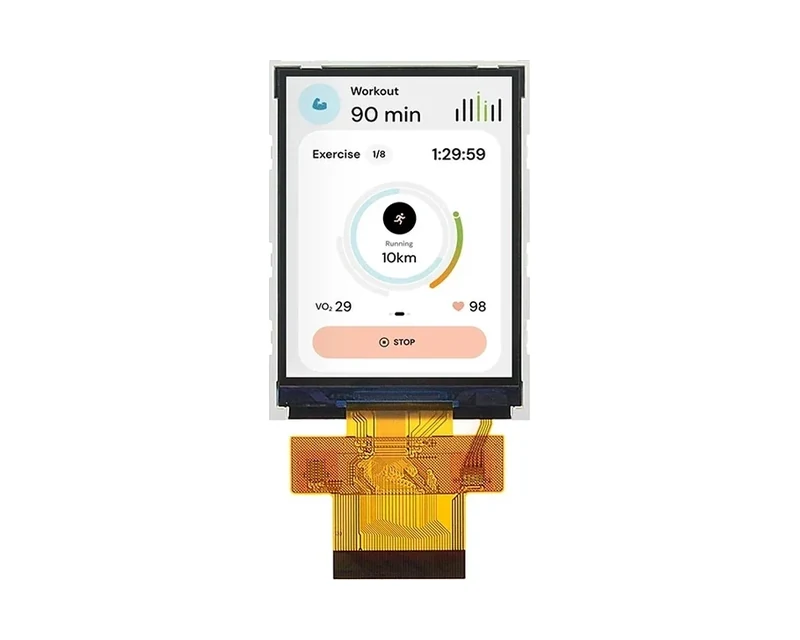
RG-T028GQSW-01
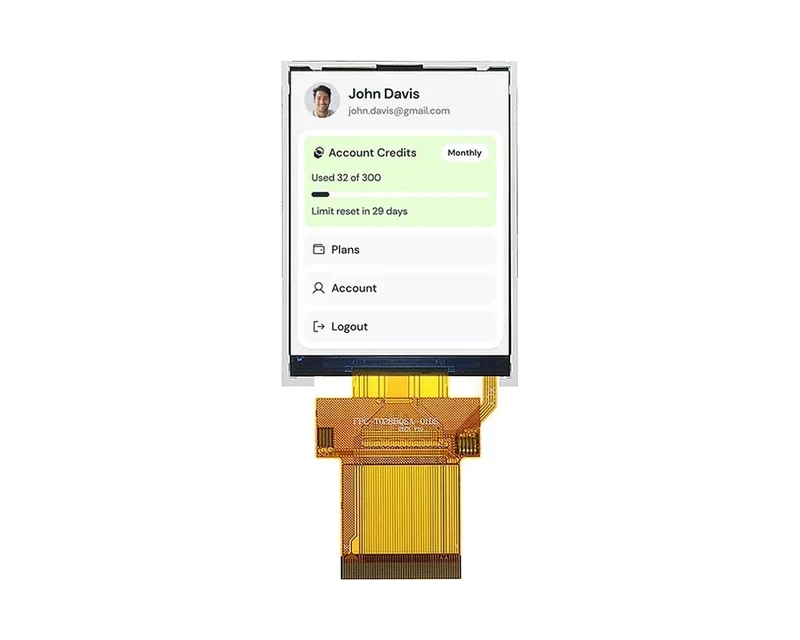
RG-T028BQSWA-01
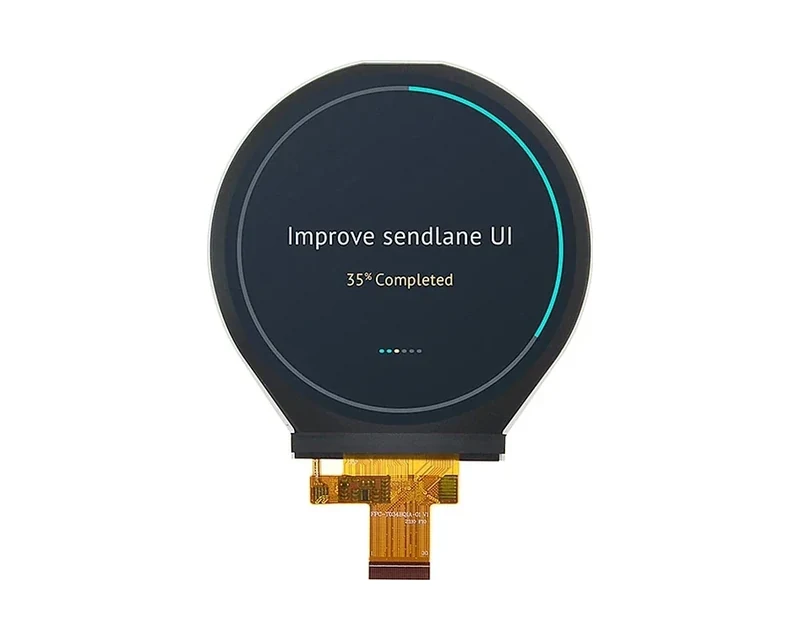
RG-T034BOIA-01
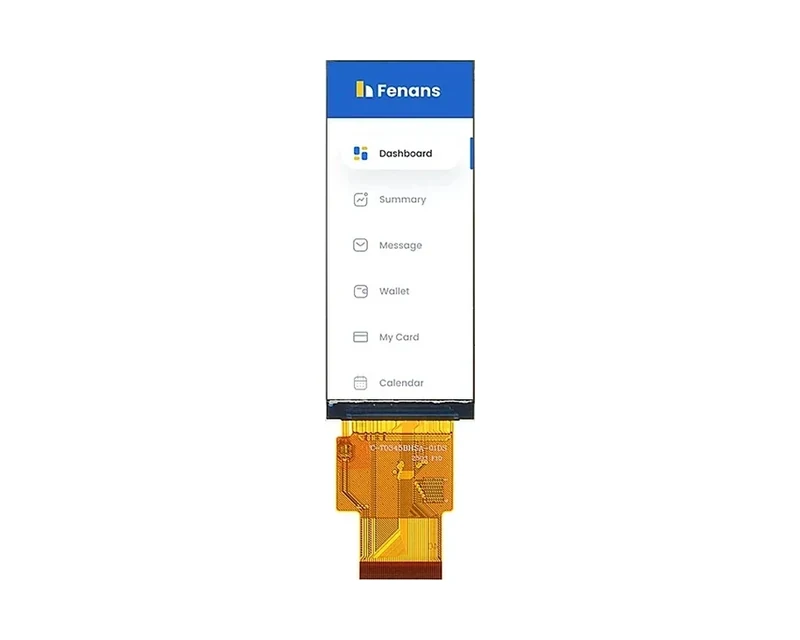
RG-T0345BHSA-01
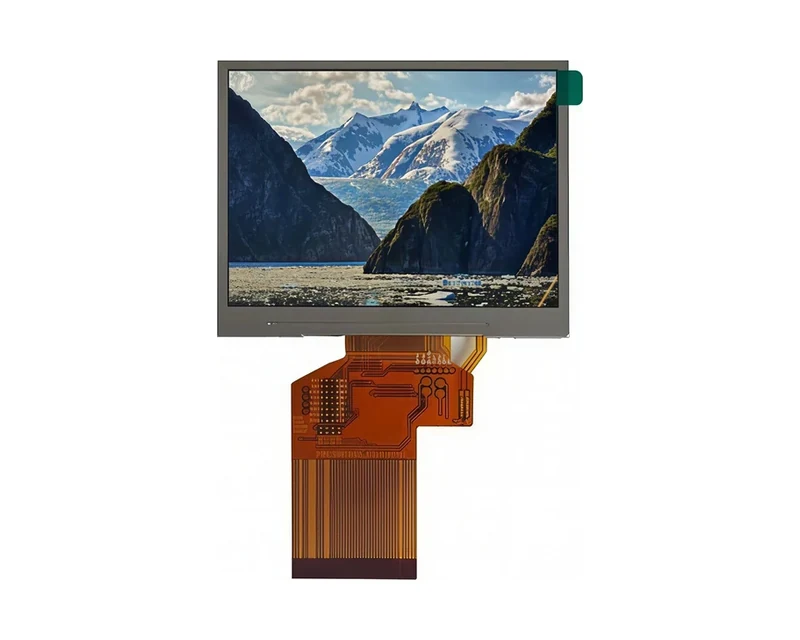
RG-T035HLWSA-01
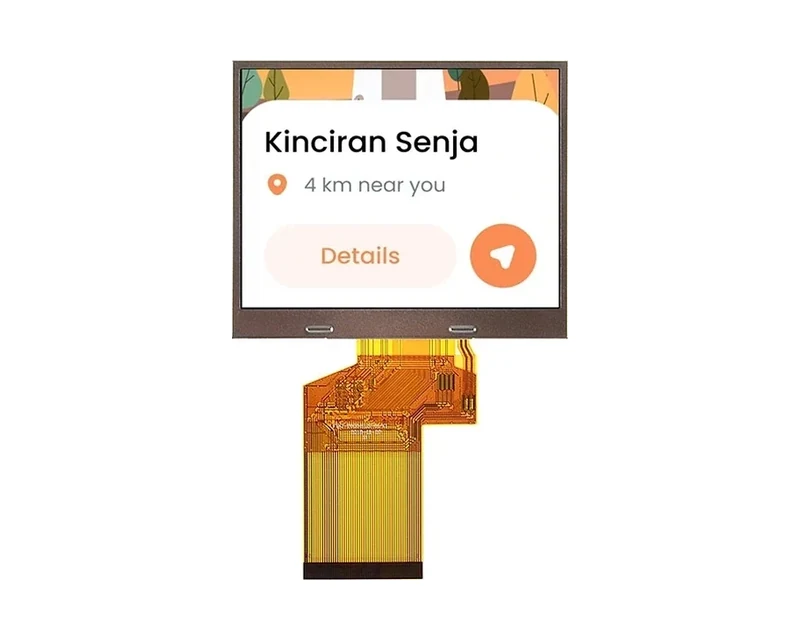
RG-T035HLSWA-01
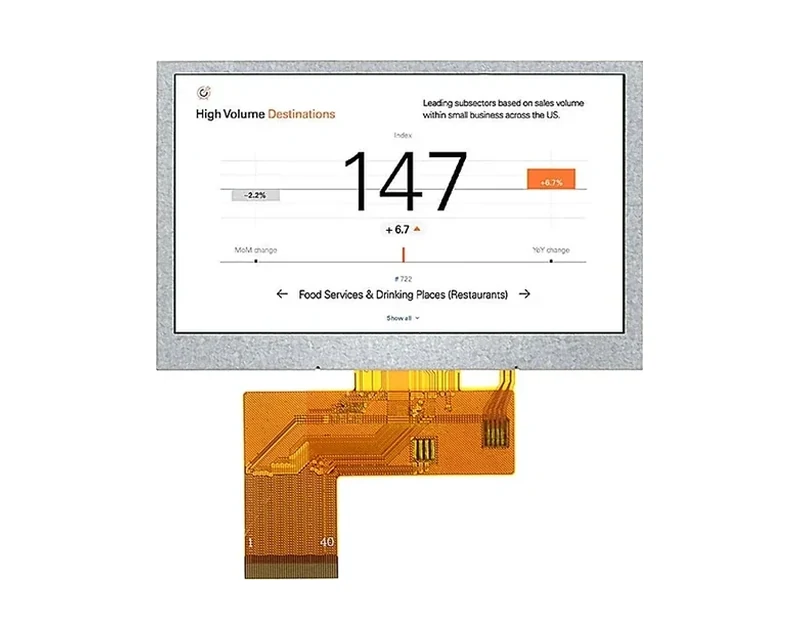
RG-T043BPSWA-02
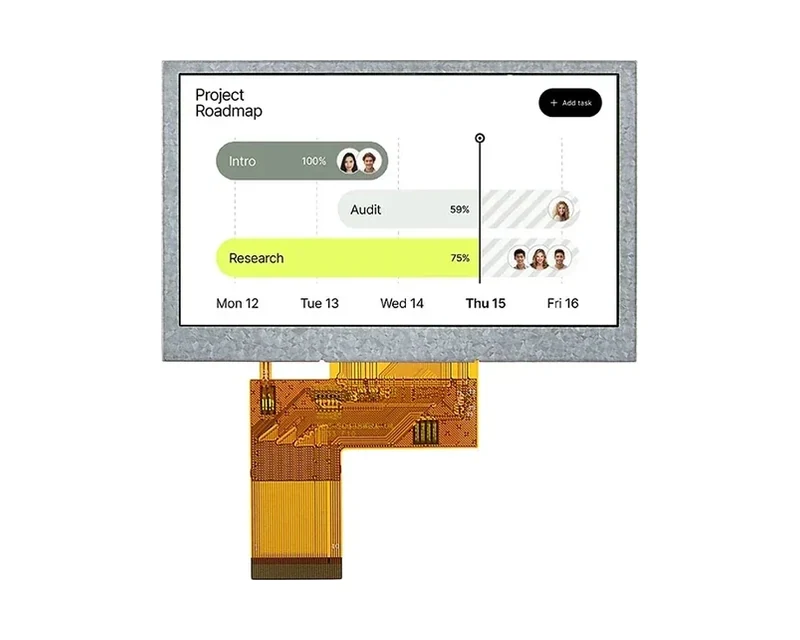
RG-T043BWSWA-02
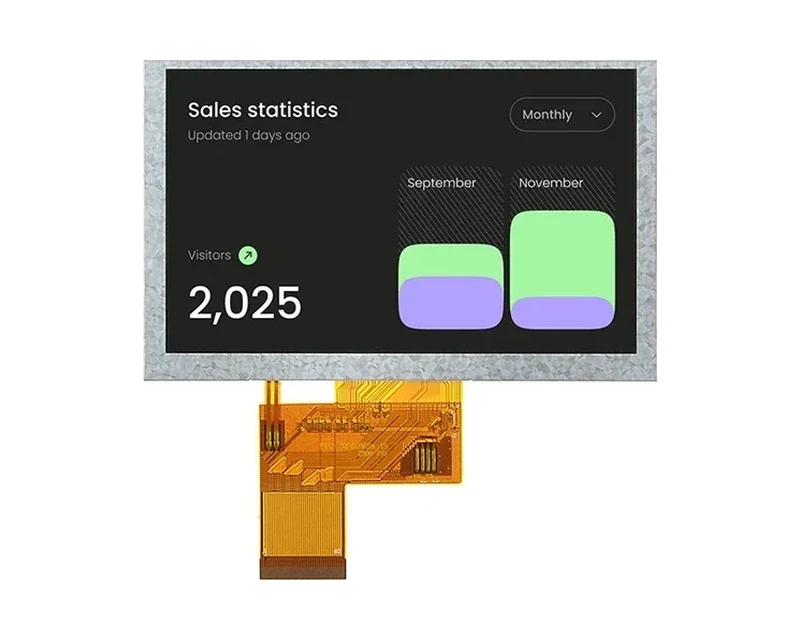
RG-T050BWSWA-02

RG-T050BWSWA-02CP

RG-T050BWSWA-02CA
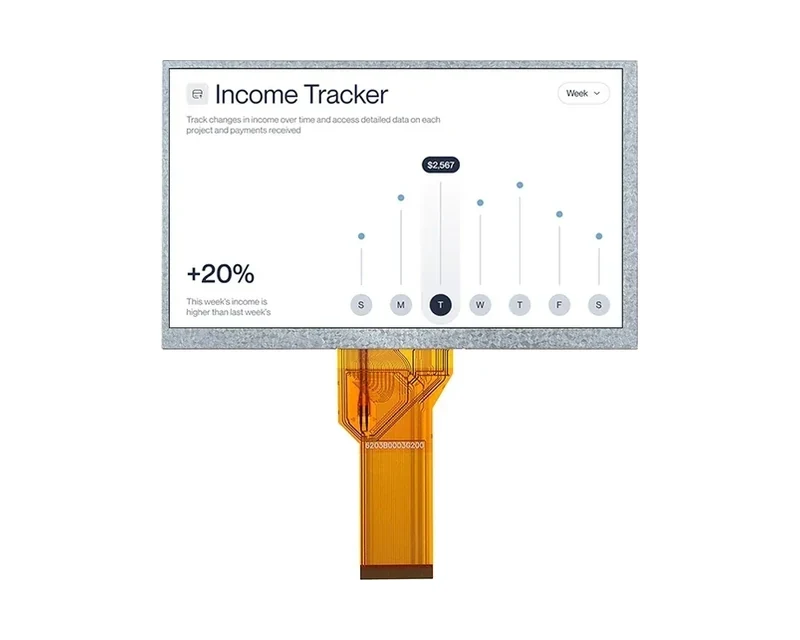
RG-T070QWHW-01
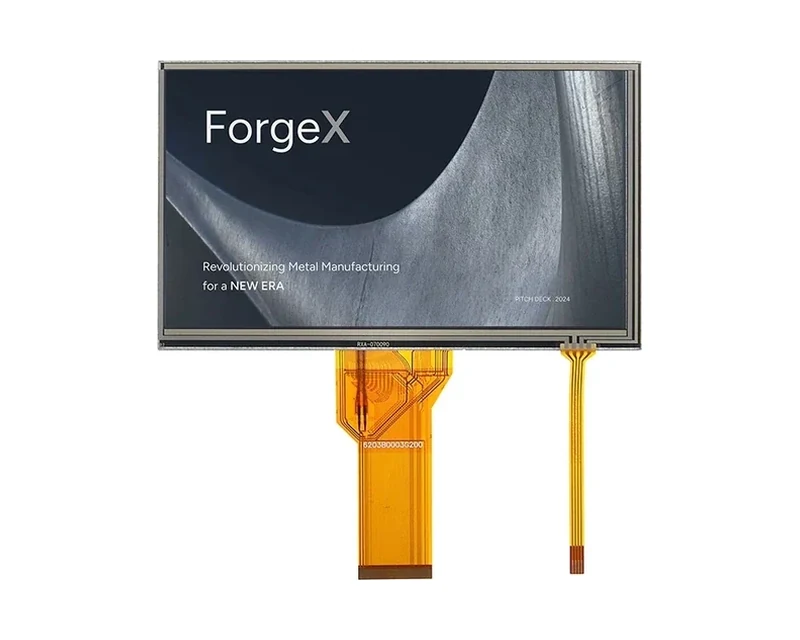
RG-T070QWHW-01P
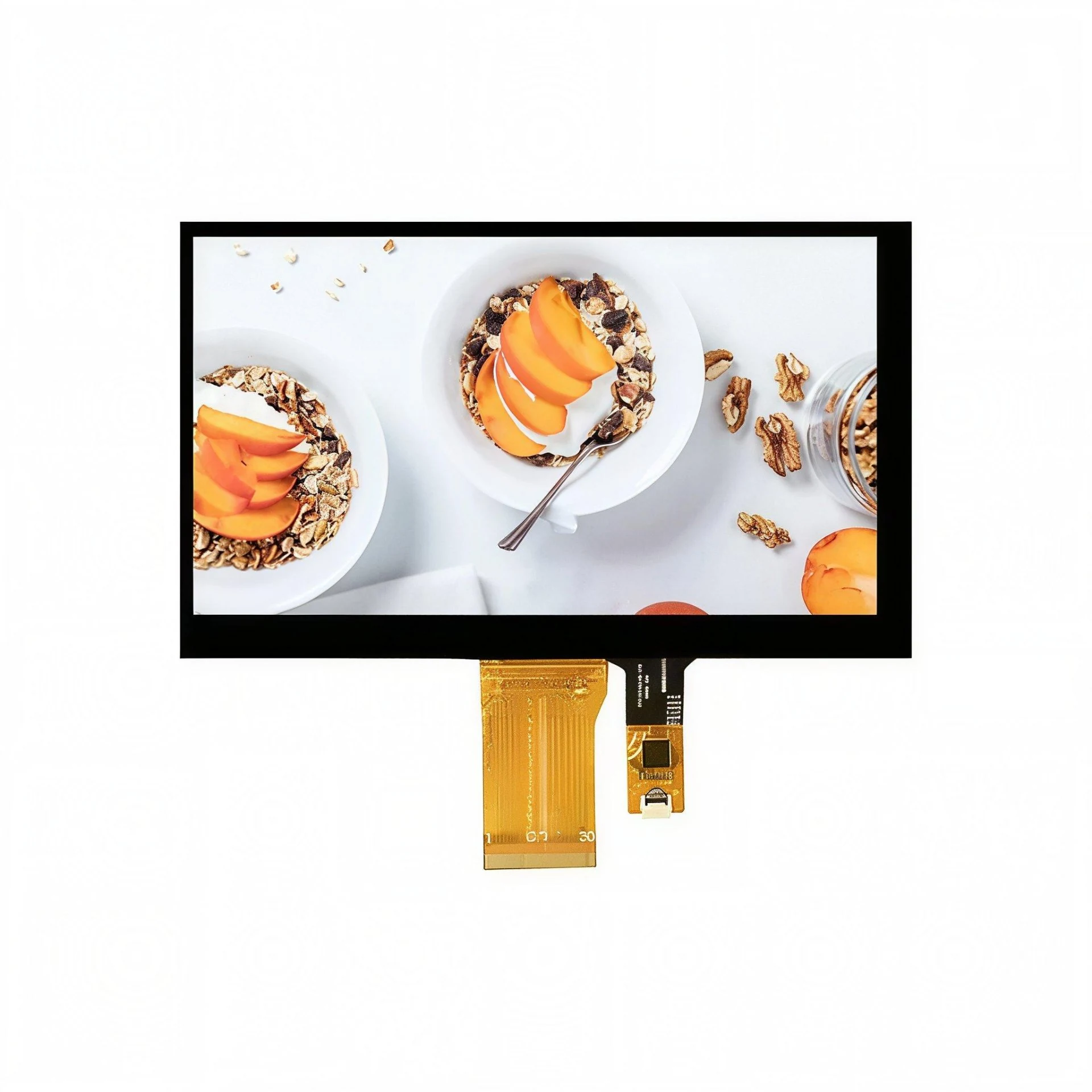
RG-T070QWHW-01CA
RG-T070QWHW-02
RG-T070QWHW-02P
RG-T070QWHW-02CA
RG-T070QWHW-03CA

RG-T070SWHWA-01

RG-T070SWHWA-02
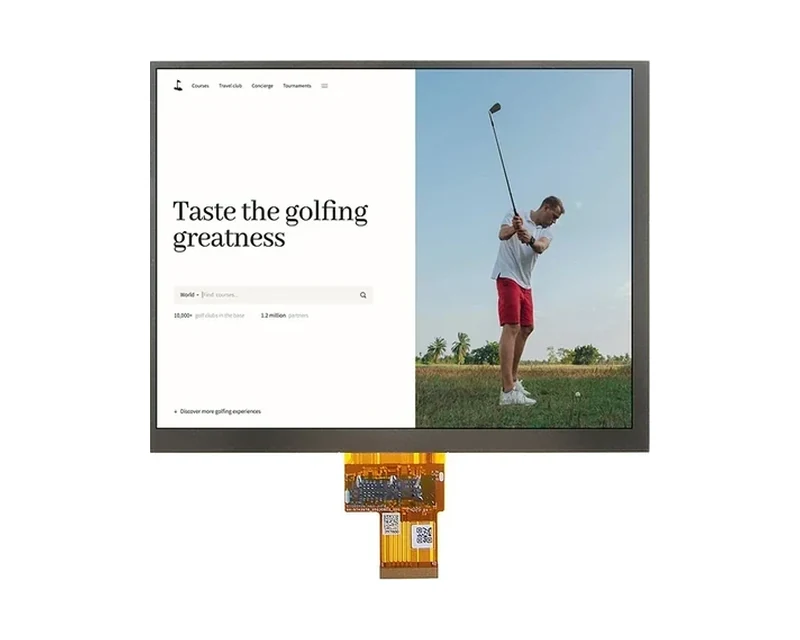
RG-T080BXEWA-01
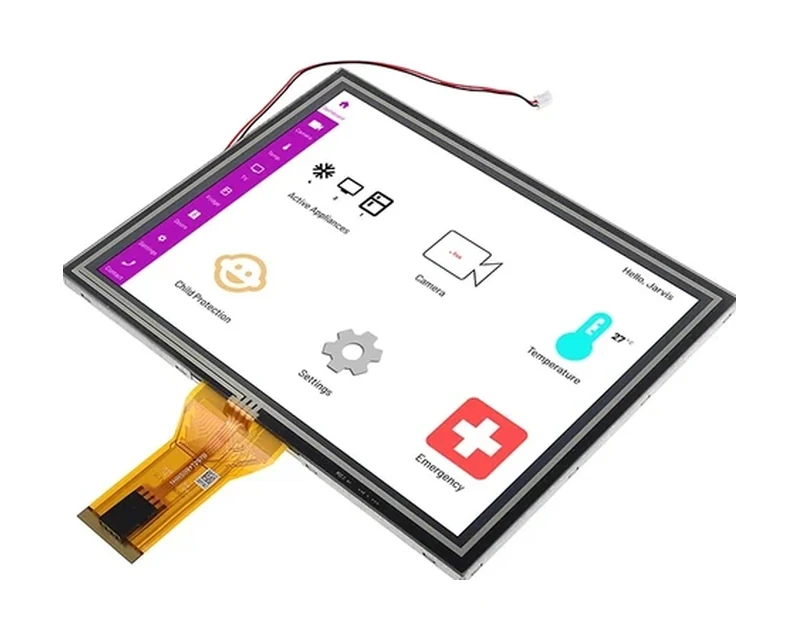
RG-T080BXEA-01CP
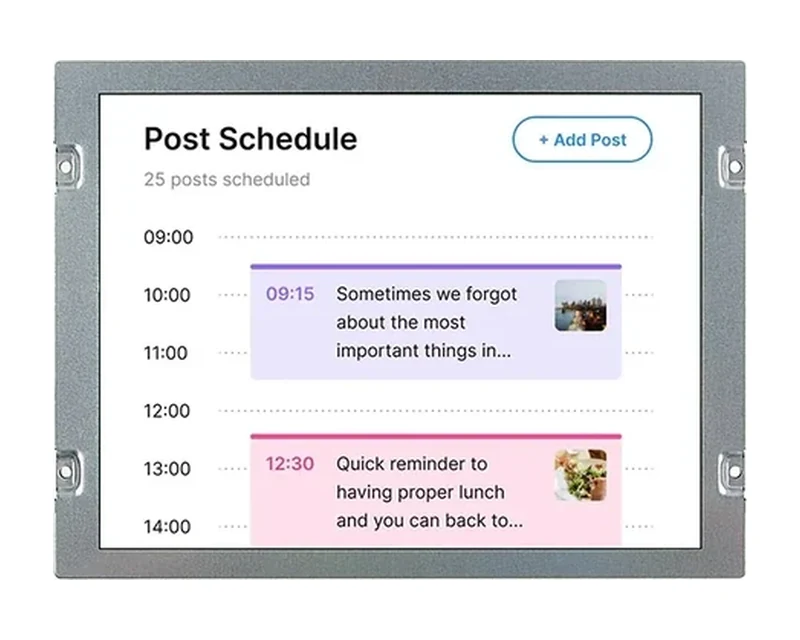
RG-T084BXJWA-01
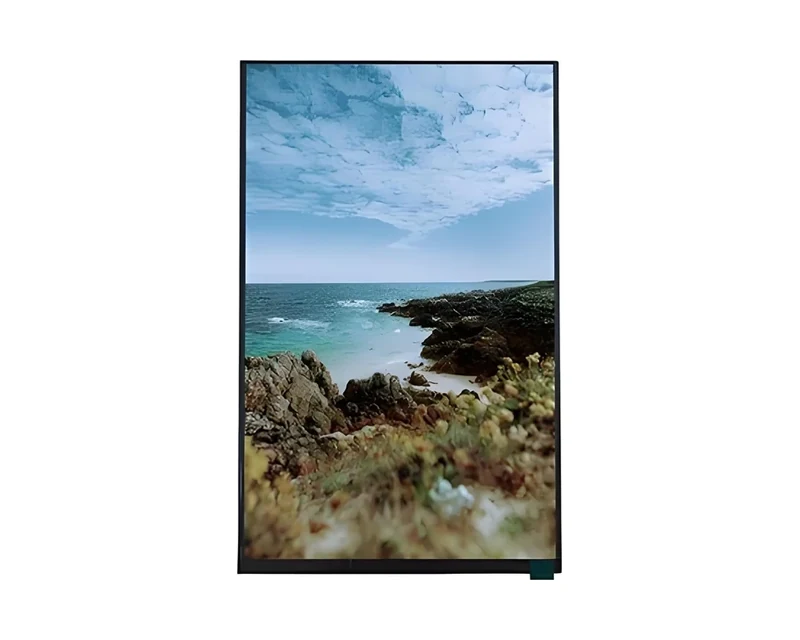
RG-T101BYEA-01ND
RG-T101HIEWA-01
RG-T101HIEWA-01CP

RG-T101HIEWA-03
RG-T101HIEWA-04
RG-T121QXHA-02
RG-T156QFHWA-01
RG-T156BFHWA-02
RG-T156BFHWA-02CP
RG-T185BFHWA-02
Can’t find the exact model you need?
This is a standard model, and our online catalog shows only part of what we build. We hold additional models not listed here, and we can adjust brightness, interface, touch or outline within an existing product family, or evaluate a fully custom solution. If this model does not fully match your requirements, please email your specifications to sales@odmlcd.com. We’ll help you identify the right part or assess a custom option.
FAQ
Do you supply displays for elevator COP and hall station panels?
Yes. The 2.8″ to 10.1″ part of the range is used as hall lanterns and car operating panels, and the 10.1″ to 18.5″ part as car information screens. 30 of the 33 catalogue models are rated from −30 °C for cold pits and unheated entrances. Send the cut-out drawing and we will narrow it to two or three parts.
How does the display cope with disturbance from the traction inverter?
That is a cable and grounding question more than a panel question. Run a shielded FPC, keep it physically separated from the motor cable, and ground at one point instead of looping the reference between the controller and the panel. Conducted and radiated disturbance from lift drives is covered by EN 12015 and EN 12016, and the module-level documentation we supply is intended to support your own EMC testing rather than to replace it.
Which interface should I use when the cable travels with the car?
LVDS. Inside a COP a parallel RGB link over a few centimetres is fine and 17 of the 33 catalogue modules use it, but once the link joins the travelling cable the conductor count becomes the dominant fatigue risk. 13 modules in the range are LVDS, in single and dual channel form, which covers a run from three to thirty metres.
Do you have modules for hospitals — gloved or wet-hand operation?
Yes. 9 modules ship with a bonded capacitive panel and 2 with resistive. For gloved use a capacitive controller tuned for gloves, or a resistive panel whose pressure activation needs no tuning at all, are both workable; for a panel cleaned with alcohol several times a day the surface treatment matters as much as the sensing method. The 7.0″ COP sizes carry both options.
What luminance does a hall lantern need?
More than the car panel, which is the counter-intuitive part. A landing display sits in daylight through a glazed entrance and is read from an angle, so 700 cd/m² and up with an anti-glare cover lens is the practical target. The car interior is lit to a few hundred lux, where 400 to 700 cd/m² is enough and anything more becomes heat inside a sealed faceplate.
Can you supply the same module as a spare part ten years from now?
The wide-temperature range is held as catalogue product rather than a made-to-order line, every standard model is held for five years or more, and replacement modules keep the outline, mounting holes and interface of the part they supersede. Where a panel is revised at the glass supplier the successor is specified pin-compatible, so a service visit does not turn into a controller change.
Do you provide documentation for EN 81-20 or EN 81-70 qualification?
We supply module-level datasheets, drawings, material declarations and test reports that feed your qualification file. The type examination of a complete lift under EN 81-20 and EN 81-50 is held by the lift manufacturer, and EN 81-70 accessibility requirements apply to the installation, so we do not represent a bare display module as certified lift equipment. Tell us the class you are qualifying to and we will say what we can and cannot document.
What if none of the 33 modules fits my panel?
The same panel families can be re-configured around a different backlight stack, a bonded touch panel, a longer or reversed FPC, or a different connector, and a fully custom module is possible where the volume supports it. Send the cut-out, the depth and the interface you are designing around, and we will say whether a standard part or a build is the shorter route.
Related reading: industrial HMI touch display design, vibration and shock testing for TFT modules, and elevator display and destination-control selection.